
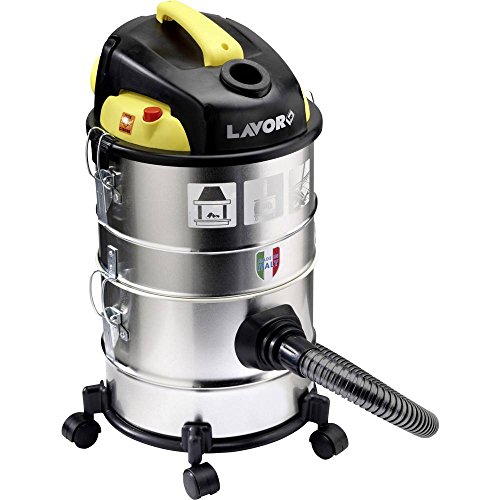
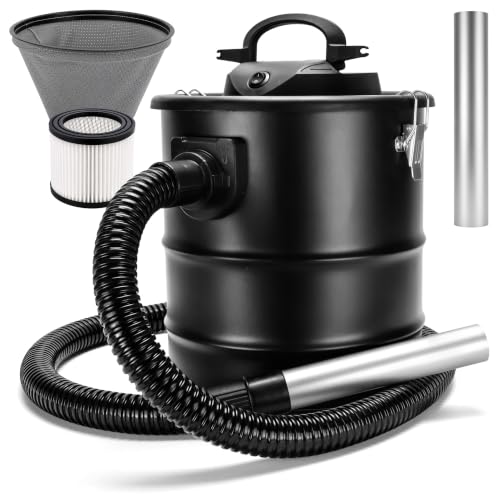
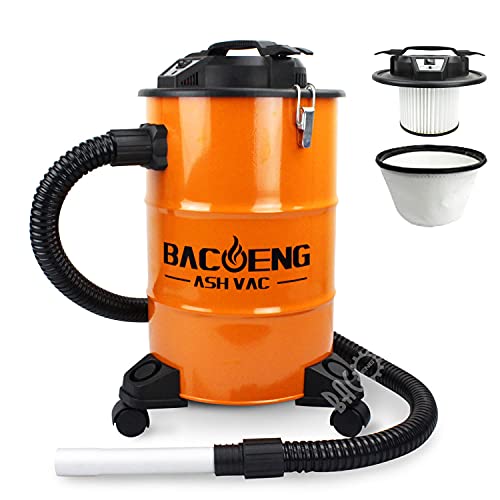
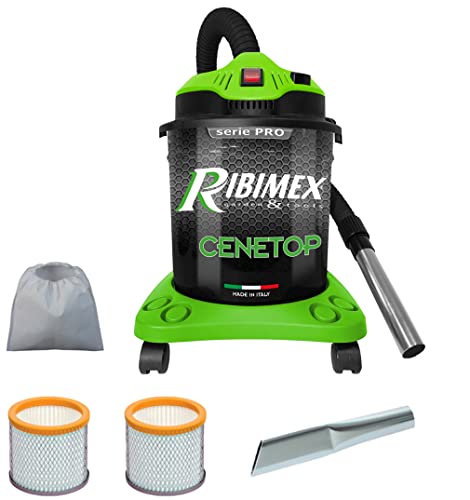
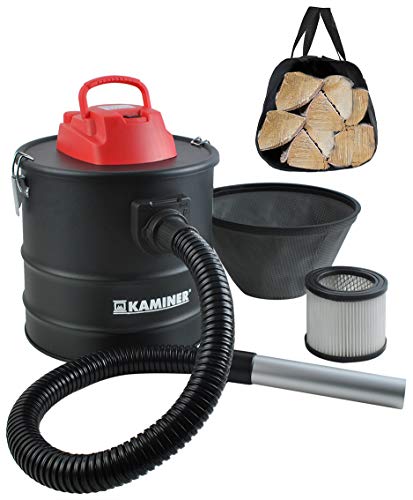
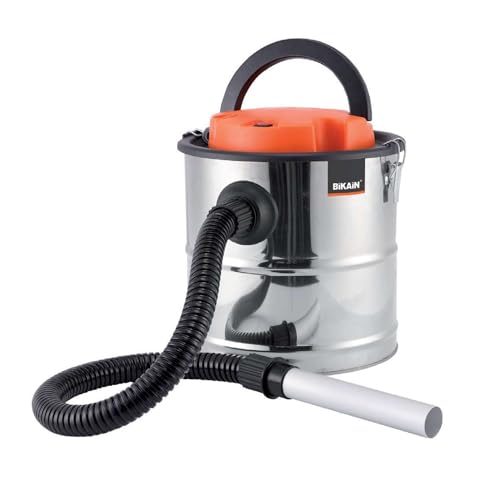
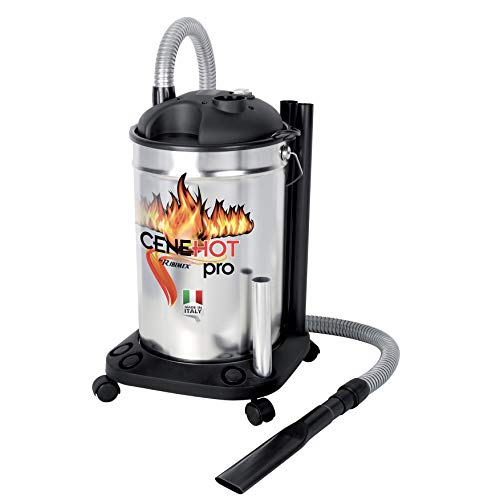
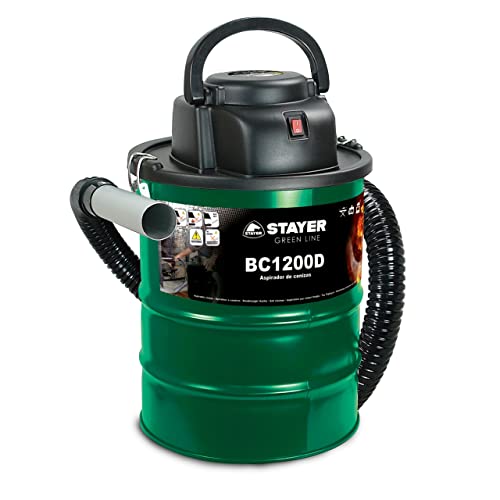
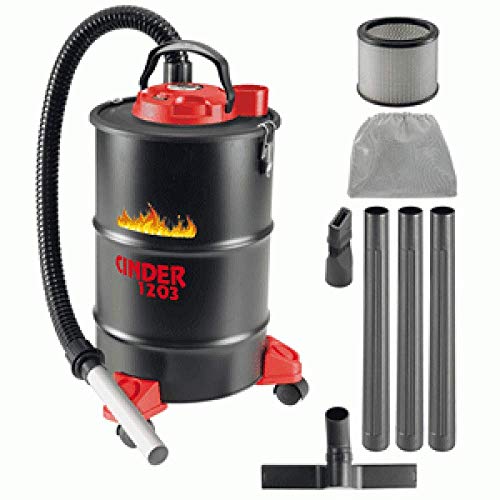
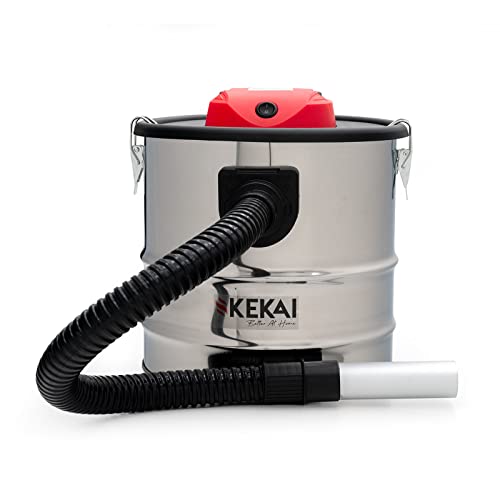
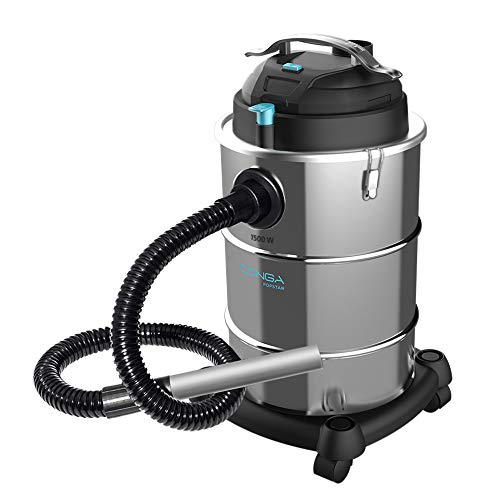
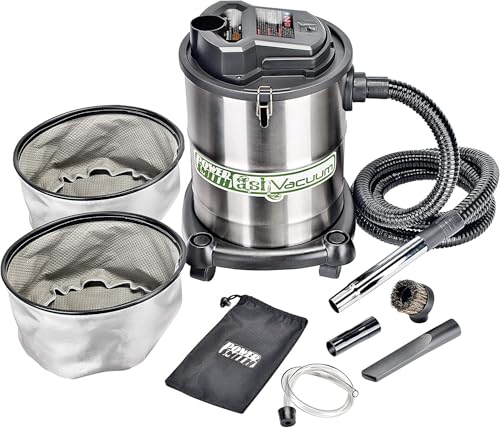
Which brands make the best ash vacuums?
The best ash vacuum brands are ranked below:
- Sellnet (Average overall score: 7.9)
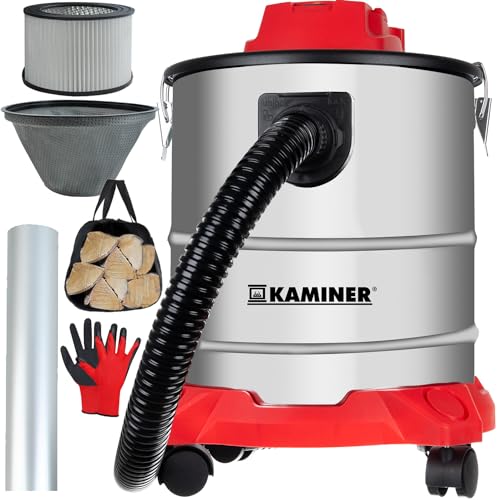
- Kaminer (Average overall score: 7.6)
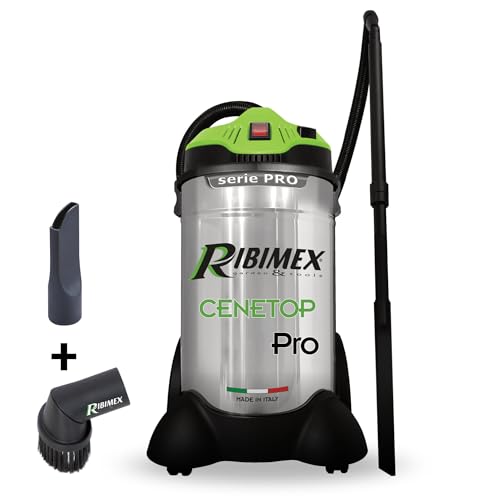
- RIBIMEX (Average overall score: 7.3)
The chart below ranks ash vacuum brands by average overall score.
[horizontal-chart-17495554516316705543147502528947893099530784932573]
Which ash vacuum brands offer the best value for money?
The ash vacuum brands offering the best value for money are ranked below:
- Sellnet (Average quality-price ratio: 8.5)
- Kaminer (Average quality-price ratio: 8.3)
- RIBIMEX (Average quality-price ratio: 8.1)
The chart below compares ash vacuum brands by average quality-price ratio.
[horizontal-chart-09285575148703330537170033842317260003261584134076]
Which ash vacuum brands have the highest user ratings?
The best-rated ash vacuum brands according to users are ranked below:
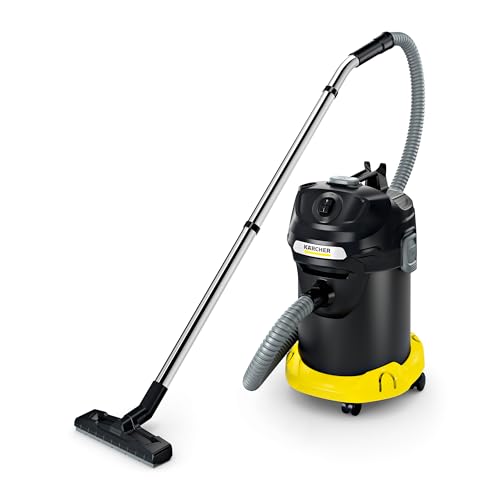
- Kärcher (Average user rating: 9.3)
- Einhell (Average user rating: 9)
- Kaminer (Average user rating: 8.9)
The chart below compares ash vacuum brands by average user rating.
[horizontal-chart-02269393546618948073123458125747019350252864854292]
Are corded ash vacuums better than cordless models?
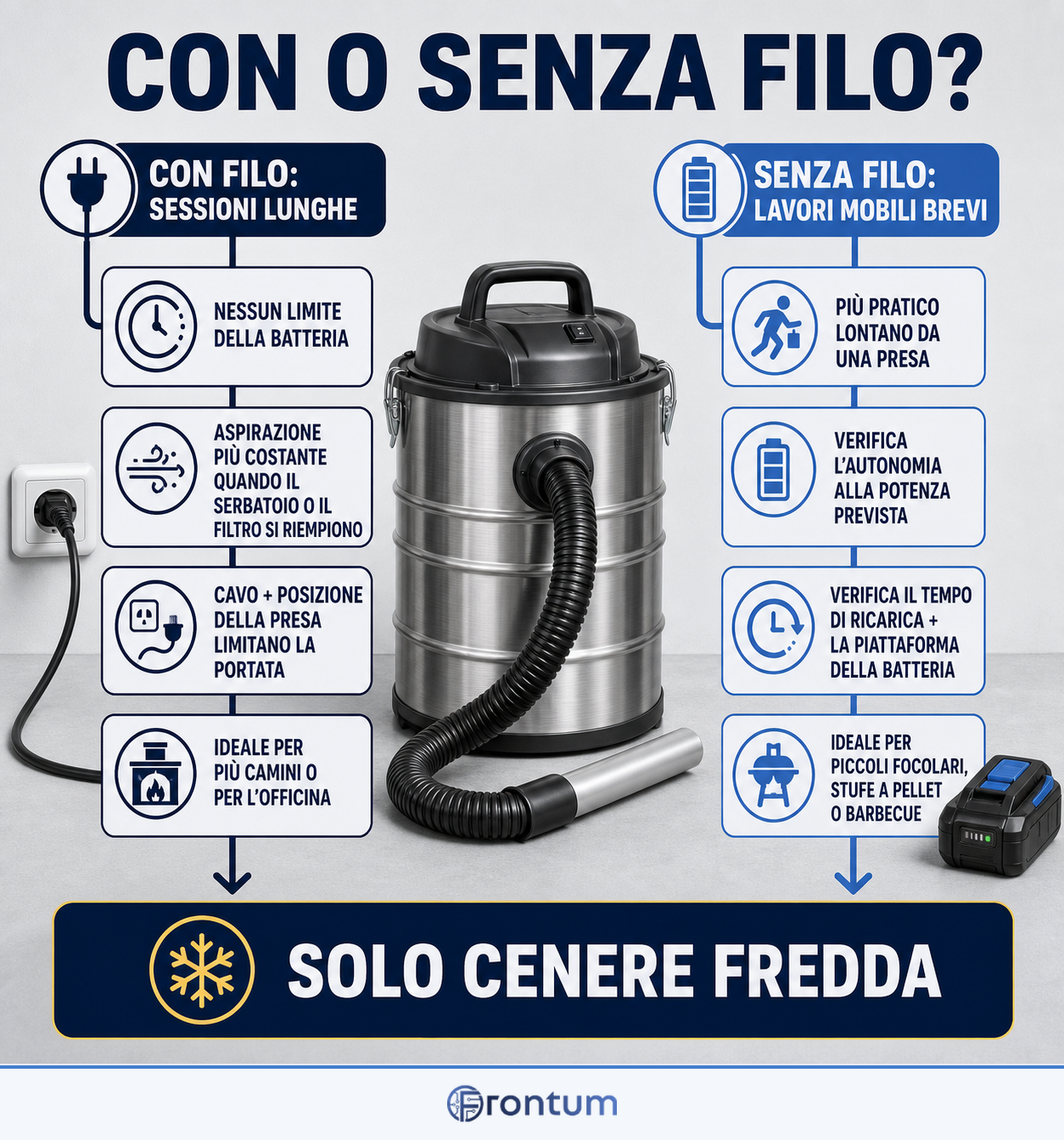
Corded ash vacuums are generally better for long, uninterrupted cleaning sessions, while cordless models are more convenient for short jobs away from a socket. The better choice depends on how much ash you remove at once and whether mobility matters more than continuous performance.
A corded model can run without battery limits and usually maintains steadier suction as the tank fills or the filter begins to load. It is the safer default for several fireplaces, workshop use, or a large stove, although cable length and socket position restrict movement and can make outdoor cleanup awkward.
A cordless ash vacuum is useful for a small hearth, a pellet stove, a barbecue area, or occasional cleanup in an outbuilding. Check the supplied battery, runtime at the intended power setting, recharge time, and compatibility with other tools in the same battery platform; a metal tank does not remove the need to collect only cooled ash.

Suction pressure and airflow affect ash pickup more directly than motor wattage alone. For ordinary stove and fireplace cleaning, roughly 800–1,200 W and about 12–20 kPa are useful reference points when manufacturers publish comparable figures, but a well-sealed 800 W design can outperform a less efficient higher-wattage machine.
Fine ash quickly coats filters, so real performance depends on the filter area, prefilter, hose diameter, bends in the airflow path, and how easily suction can be restored. A wider 32–40 mm hose is less prone to blocking on small charcoal fragments, while a filter-cleaning mechanism or accessible washable filter helps maintain airflow between emptying cycles.
What capacity and weight do the best ash vacuums have?
The best all-round ash vacuums usually have a 10–20 L tank and weigh about 3–5 kg before ash is added. That range is large enough for normal fireplace or stove maintenance without becoming awkward to carry, empty, or store.
A compact 4–10 L model suits a pellet stove, barbecue, or small hearth that is cleaned frequently. It fills sooner, but the lower weight is useful on stairs and when the vacuum must be lifted from a cupboard or garage shelf.
A 15–25 L tank is more convenient for larger wood-burning appliances or several cleaning jobs in one session. Tanks around 25–30 L reduce emptying frequency further, although the machine becomes bulky and the collected ash can add several kilograms.
Compare usable capacity rather than the outside dimensions alone. The filter cage and motor housing occupy tank space, and wheels, a stable handle, and a low centre of gravity matter more as capacity increases.
Which filtration systems work best in ash vacuums?
The most effective ash-vacuum filtration systems use the following layers and maintenance features:
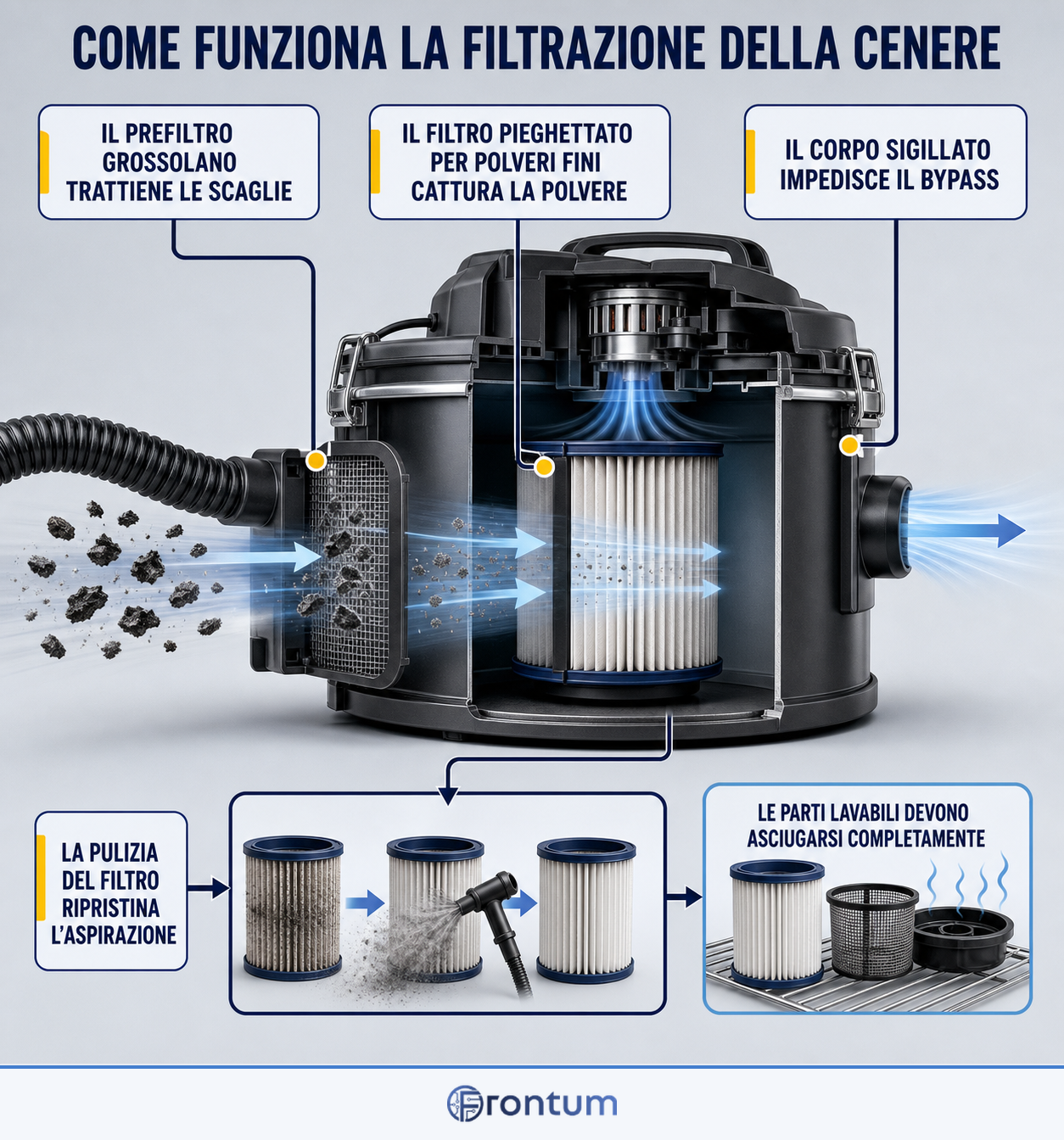
- Coarse prefilter or metal screen: This catches larger ash flakes and charcoal fragments before they reach the fine filter. It slows clogging and is especially helpful when the tank contains mixed particle sizes.
- Pleated fine-dust or HEPA-grade filter: A large pleated surface captures the powdery particles that pass through the prefilter. A HEPA label is most useful when the housing and seals also prevent air from bypassing the filter.
- Washable filter components: Washable filters reduce replacement costs, but they must be removed, cleaned as directed, and allowed to dry completely before reuse. Operating with a damp filter can restrict airflow and damage the machine.
- Manual or automatic filter cleaning: A shaker, reverse-air pulse, or accessible tapping mechanism can restore suction during longer jobs. It reduces interruptions but does not replace regular inspection or timely filter replacement.

Which construction features matter for safe ash handling?
The construction features that matter most for ash handling are as follows, but none makes it safe to vacuum glowing embers or material above the manufacturer’s temperature limit:
- Metal collection tank: Steel, stainless steel, aluminium, or another specified metal contains abrasive ash better than an ordinary household-vacuum bin. The tank should have secure latches and a stable base that is difficult to tip.
- Reinforced hose and metal end nozzle: These parts form the first contact path for ash and occasional small charcoal fragments. Check that the hose is designed for ash service rather than assuming any metallic-looking coating is heat rated.
- Protected motor and filter cage: A physical barrier helps prevent coarse debris from striking the filter or entering the motor path. Automatic shut-off or a clear maximum-fill mark is useful because an overfilled tank can sharply reduce airflow.
- Reliable seals and joints: Gaskets around the lid, hose connection, and filter should sit evenly and remain replaceable. Leaks can release fine ash into the room even when the filter itself is efficient.
- Stable handle, wheels, and cable storage: These features reduce the chance of pulling the machine over or dragging a live cable across the hearth. They become increasingly important on tanks above about 15 L.
Which hoses, nozzles, and accessories are most useful for ash vacuums?
The most useful ash-vacuum hoses, nozzles, and accessories are as follows:
- Flexible reinforced hose: A hose around 1–1.5 m gives enough reach around most stoves without creating excessive drag or pressure loss. A smooth internal path and a diameter around 32–40 mm help small charcoal fragments pass without jamming.
- Angled metal end nozzle: A narrow, angled tip reaches behind firebox lips, into corners, and around pellet-stove burn pots. It should be long enough to keep the flexible hose away from sharp edges.
- Crevice nozzle: A flat crevice tool removes dust from door channels, grate edges, and narrow gaps. Use a metal or manufacturer-approved ash tool where the accessory will contact the firebox.
- Rigid extension tubes: Extensions reduce bending when cleaning a large hearth or floor-level stove. They are less useful inside compact burn chambers, where a short flexible setup is easier to control.
- Spare prefilter and main filter: A clean spare lets one filter dry fully after washing and reduces downtime during heating season. Confirm the exact filter code and availability before choosing an uncommon model.
- Onboard hose and cable storage: Secure storage keeps ash-covered parts away from clean tools and prevents the hose from kinking. A carry handle or wheeled base also makes outdoor emptying easier.
How noisy are good ash vacuums?
Good ash vacuums commonly produce about 70–85 dB, so most are clearly audible but not unusually loud for a compact high-airflow cleaner. Models near 60–70 dB are easier to tolerate indoors, while figures above about 85 dB can become tiring during longer sessions; compare ratings only when the test mode and distance are similar.
Noise rises when a filter is clogged, the hose is partly blocked, or the motor is running at maximum power. A lower-power setting, clean filter, stable tank, and well-supported hose can reduce harsh whistling and vibration without sacrificing the suction needed for a small hearth.
The chart below shows the noise-level distribution of ash vacuums.
[vertical-chart-07186467175817562865027080513273870549212729039280]
How much do the best ash vacuums cost?
The best ash vacuums generally cost about £30-£130, while premium cordless or professional models can reach roughly £170-£300. For most homes, the practical value range is around £40-£100, where metal tanks, reinforced hoses, washable fine-dust filters, and useful 10–20 L capacities are common.
Below £40, expect a smaller tank, shorter hose, simpler filter protection, or fewer replacement parts in the box. These models can still work well for a small pellet stove or occasional fireplace cleanup, but filter availability matters more than a few euros saved at purchase.
Above £130, the extra cost usually pays for stronger sealing, better filter cleaning, larger capacity, more durable fittings, a battery system, or quieter and easier handling. Price alone does not make a vacuum suitable for warm ash; the manufacturer’s temperature limit and filtration design remain decisive.
The chart below shows the price distribution of ash vacuums.
[vertical-chart-02049192578767447811094619216221561833603614642741]