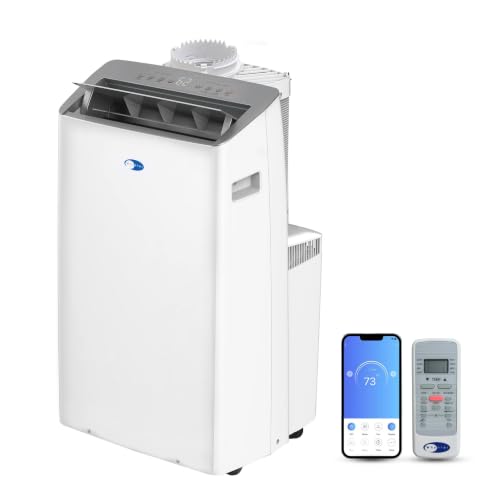
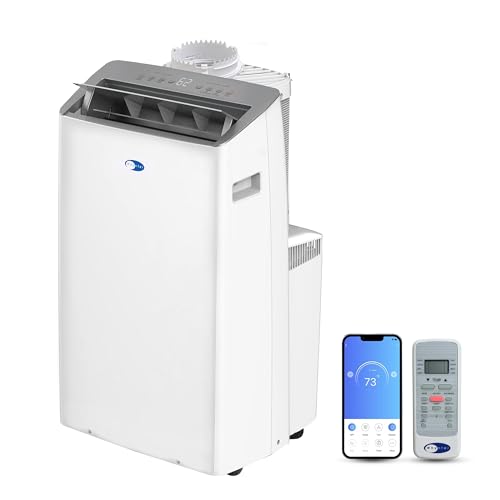
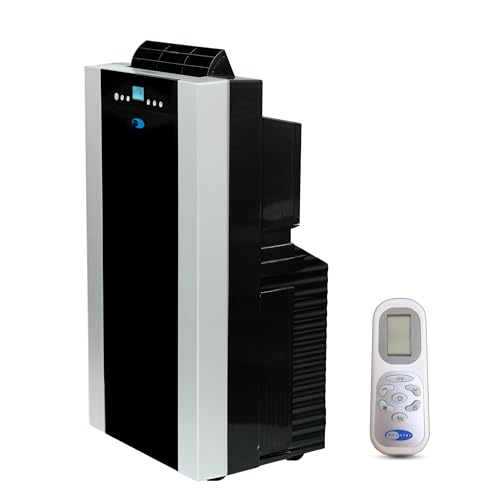
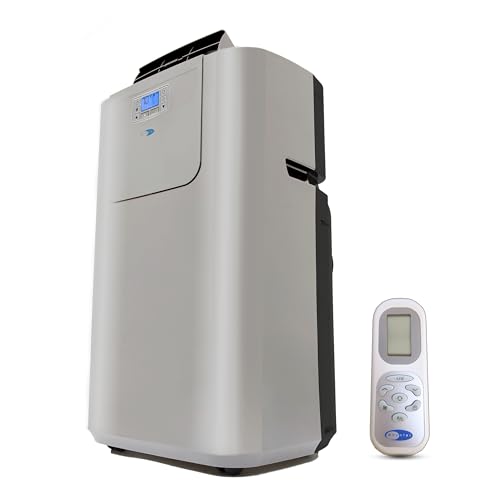
When should you choose a dual-hose portable air conditioner?
Choose a dual-hose portable air conditioner when the room is hot, large, sunny, or difficult to keep sealed and the window can accept two ducts. The second hose supplies outside air to the condenser instead of allowing the exhaust to pull warm replacement air through cracks, so the arrangement is most useful when a single hose struggles to hold temperature.
Dual hose is less compelling in a small, shaded bedroom where a well-sealed single-hose unit is easier to move and install. Check the exact hose kit and window adapter before buying: the advantage disappears if one duct is blocked, sharply bent, poorly sealed, or routed through an opening that lets hot air back into the room.
How does a dual-hose portable air conditioner work?
A dual-hose portable air conditioner draws outside air through one duct to cool its condenser and sends the warmed air back outside through the second duct. Because the intake air is not taken from the cooled room, the system creates less negative pressure than a single-hose unit.
That arrangement can improve real-world cooling in a hot room, but it adds a second seal, a larger window opening, and more installation work. Keep both hoses short and straight, leave the intake grille clear, and confirm that the kit keeps the two air paths separate.
The design does not eliminate all heat loss or make every model efficient. Compare delivered capacity, input power, noise, and hose layout using the same rating method, then inspect the window adapter before assuming a dual-hose label guarantees better performance.
Are dual-hose portable air conditioners faster and more efficient?
Dual-hose portable air conditioners can cool faster and maintain temperature more efficiently in hot or leaky rooms because the condenser intake does not depressurize the space. The advantage is largest when a single-hose unit would draw warm outdoor air through gaps around doors, windows, or vents.
The result still depends on delivered SACC capacity, compressor control, hose length, and the window seal. A dual-hose unit with long ducts or poor adapters can lose much of its benefit, while a correctly installed single-hose model may be adequate in a small room; compare like-for-like testing and rated input power rather than assuming the second hose automatically lowers running cost.
Are inverter dual-hose portable air conditioners worth it?
An inverter dual-hose portable air conditioner is worth considering when it will run for long periods and the room needs steady temperature control. Variable-speed compression can reduce repeated full-power starts, hold a more even temperature, and lower perceived cycling noise after the initial pull-down.
The higher purchase price is not automatically recovered. Compare the rated input, delivered cooling, noise, warranty, and actual hose design; a fixed-speed dual-hose model may be better value for occasional use, while an inverter model is more attractive for daily cooling in a difficult room.
Check that the inverter claim applies to the compressor rather than only the fan. Correct sizing and sealed ducts remain essential because an efficient compressor cannot compensate for hot air leaking through the installation.
What room sizes benefit most from a dual-hose design?
Dual-hose portable air conditioners are most useful in rooms around 35–50 m², especially when they are sunny, open to adjacent areas, or difficult to seal. Published room claims often fall around 37–46 m², but the practical area is lower with high ceilings, poor insulation, or strong internal heat. Use the lower end for a sun-exposed bedroom and the higher end only when doors stay closed and the ducts are well sealed.
For a smaller room, compare the extra cabinet size, installation effort, and noise with a well-sealed single-hose alternative. The second hose earns its space when reducing negative pressure solves a real cooling problem, but it cannot turn a portable system into whole-home air conditioning.
How easy are dual-hose portable air conditioners to install?
Dual-hose installation is manageable but more involved than single-hose installation because the window must seal two air paths. Measure the opening, confirm that the supplied adapter fits, and place the cabinet close enough to keep both ducts short and free of sharp bends.
Leave clearance around the intake and exhaust, support the window panel, and keep the hoses away from curtains, furniture, and heat-sensitive surfaces. A 25–38 kg cabinet may roll easily on a flat floor but still needs care over thresholds and stairs.
Before buying, check whether the kit is designed for the window type and whether the ducts can be removed for storage. A dual-hose model is only easier in practice when the complete installation can remain sealed and stable throughout the season.
Are dual-hose portable air conditioners noisier?
Dual-hose portable air conditioners are not inherently noisier, but their larger cabinets and two ducts can create more airflow noise if the adapters are restrictive. Published figures for comparable models range from about 52–57 dB where values are available, although test modes are not always identical; the compressor, fan pitch, vibration, and hose contact with a wall usually matter more than the number of ducts.
Use a level floor, isolate the hoses from furniture, and select low or night mode once the room reaches temperature. A dual-hose unit can sound calmer in a hot room if it avoids continuous maximum operation, while a single-hose model may be quieter in a small room because its installation is simpler. Compare measurements at the same operating mode and distance.
How much do dual-hose portable air conditioners cost?
Dual-hose portable air conditioners usually cost about £410-£520, with the current class concentrated around £400-£500. Entry models near £410-£470 generally provide 12,000–13,000 BTU-class cooling, three fan speeds, and 24-hour timers, while higher-priced versions add inverter control, heating, or stronger condensate management.
Around £470-£520, compare delivered cooling, rated input power, noise, and the quality of the two-hose window kit rather than paying only for a larger capacity label. A dual-hose design is most valuable when it solves negative pressure in a difficult room; otherwise, a cheaper single-hose unit may be the more practical choice.
The chart below shows the price distribution of dual-hose portable air conditioners.
[vertical-chart-15852337187387714367066743917313523978610927408305]