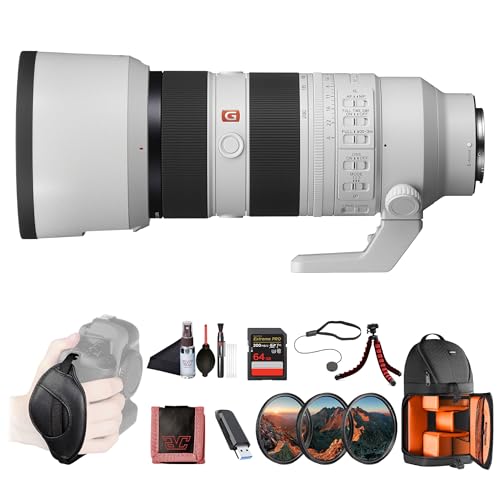
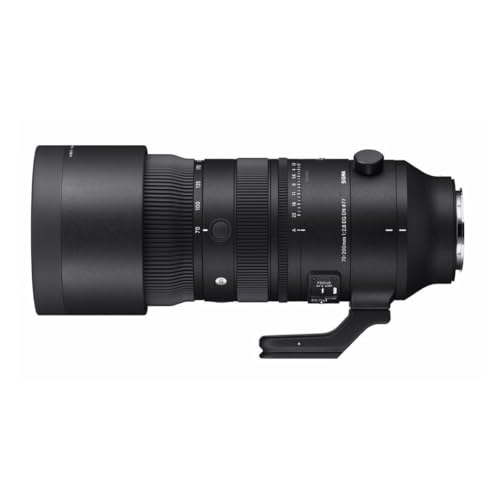
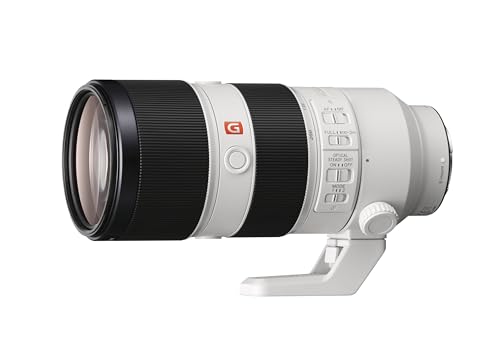
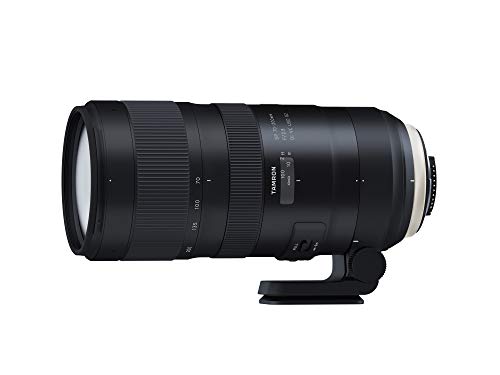
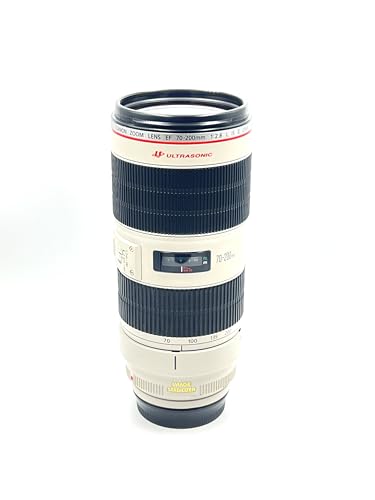
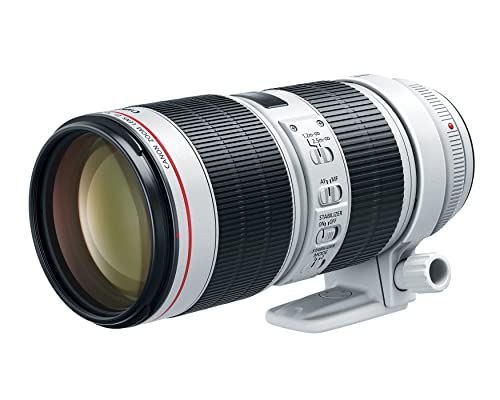
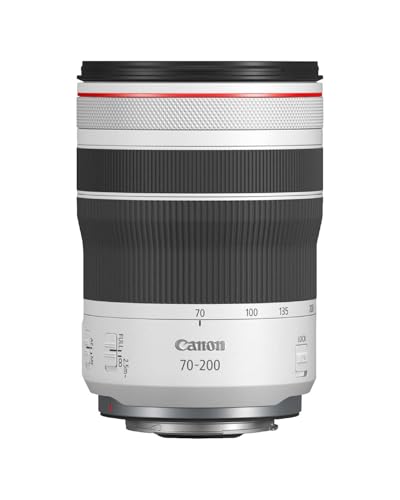
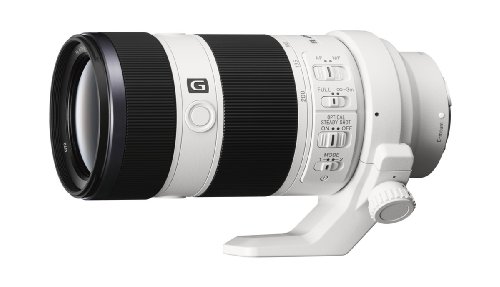
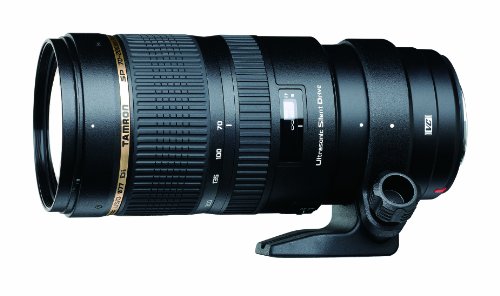
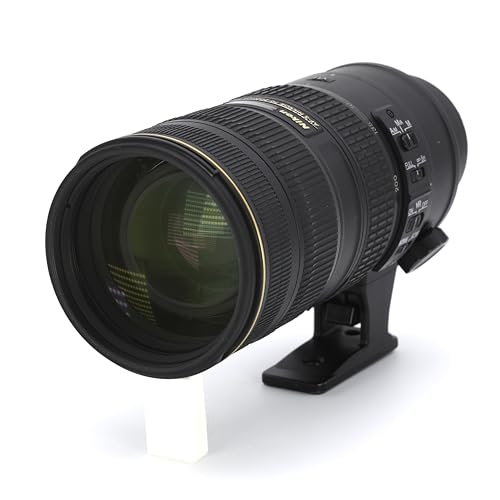
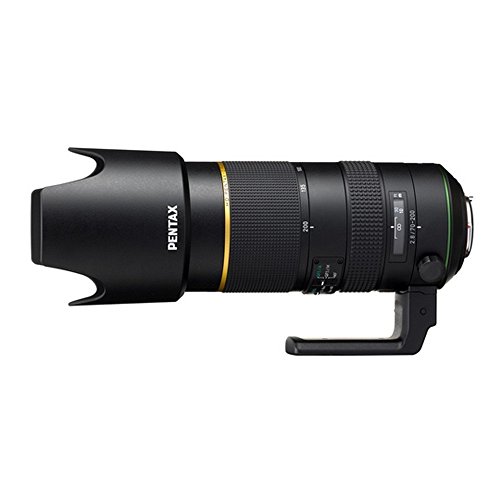
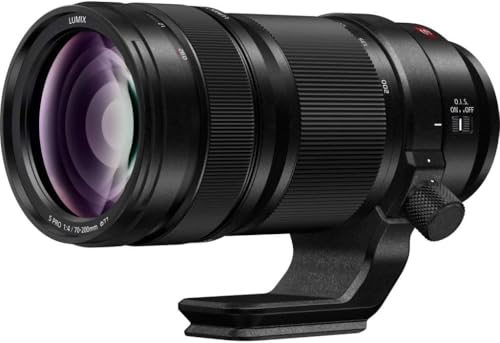
Which brands make the best 70–200 mm lenses?
The 70–200 mm lens brands with the highest average overall scores are as follows:
- Sony (Average overall score: 8.5)
- Sigma (Average overall score: 8.5)
- Nikon (Average overall score: 8.3)
- Canon (Average overall score: 8.2)
The chart below compares 70–200 mm lens brands by average overall score.
[horizontal-chart-08449780489280226412139673478621240006711849489817]
What makes a 70–200 mm lens useful?
A 70–200 mm lens is useful because it covers short-to-medium telephoto framing without forcing the photographer to move or change lenses. At 70 mm it works for portraits, events, and larger subjects; toward 200 mm it provides tighter framing for sport, stage work, wildlife at moderate distances, and compressed landscape details.
The internal zoom range also makes composition faster than with a set of primes. Professional versions often keep a constant f/2.8 aperture, while lighter f/4 designs trade one stop of brightness for easier travel and longer handheld sessions.
What are 70–200 mm lenses best suited for?
70–200 mm lenses are best suited to the following uses:
- Portraits and weddings: The range gives flattering perspective, strong subject separation, and enough working distance for natural expressions and candid moments. A constant f/2.8 aperture is especially useful in dim venues, while an f/4 lens is easier to carry through a full event day.
- Indoor and field sports: Fast autofocus and flexible framing let the photographer follow action as its distance changes. Indoor venues favor f/2.8 for faster shutter speeds, whereas outdoor sport can be handled well by a lighter f/4 model in good light.
- Events and stage photography: The lens can move from wider contextual frames at 70 mm to tight performer details at 200 mm without a lens change. Quiet focusing, effective stabilization, and flare resistance become important when shooting from fixed audience positions under difficult lighting.
- Wildlife at moderate distances: A 200 mm endpoint works for larger animals, zoo subjects, and wildlife that can be approached safely. On APS-C bodies the tighter field of view adds useful apparent reach, but small birds or distant animals may still require a 100–400 mm or longer lens.
- Compressed landscapes and details: The narrow angle of view isolates mountain layers, architectural features, and patterns that disappear in a wide composition. Strong long-end sharpness and a stable tripod collar are more valuable here than a very bright aperture.
How important are aperture and image stabilization when choosing a 70–200 mm lens?
Aperture and stabilization strongly affect how versatile a 70–200 mm lens is. An f/2.8 model admits twice as much light as f/4, supporting faster shutter speeds indoors and shallower depth of field for portraits.
The brighter design is also larger, heavier, and more expensive. An f/4 lens can be the better choice for travel, landscapes, and daylight sport where portability matters more than one extra stop.
Optical stabilization helps with static subjects, panning, and handheld composition near 200 mm. It does not stop subject movement, so action still requires a fast shutter speed.
For many buyers, a stabilized f/4 lens is the most comfortable all-day option, while f/2.8 is justified by low-light events, indoor sport, or stronger background separation.
The chart below shows how optical stabilization is distributed among 70–200 mm lenses.
[pie-chart-06425603319467895296174985120186022435733548608576]
How important are size and weight when choosing a 70–200 mm lens?
Size and weight matter greatly because a 70–200 mm lens is often carried for hours and used while tracking moving subjects. A heavy lens shifts the camera balance forward, increases fatigue, and may need a tripod collar or monopod even when the shutter speed is fast enough for handheld shooting.
Constant f/2.8 models are generally the largest because their front elements must collect more light throughout the zoom range. F/4 versions can be easier to pack and may use smaller filters, while internal-zoom designs maintain their length and balance as the focal length changes.
Handling should be judged with the camera body attached. Check zoom-ring direction, focus-ring feel, collar rotation, control placement, and whether the lens fits the intended bag or support system.
How much do 70–200 mm lenses cost?
New 70–200 mm lenses generally cost about £600-£2,800. F/4 models and older optical designs occupy the lower part of the range, while modern professional f/2.8 lenses often cost roughly £1,500-£2,800.
Models around £600-£1,200 usually emphasize portability or value, often with an f/4 aperture, simpler sealing, or an earlier autofocus design. The middle of the market adds faster focusing, better stabilization, improved close focusing, and stronger edge performance. Premium f/2.8 lenses charge for consistent sharpness, durable construction, weather protection, and dependable subject tracking under professional workloads.
Include the complete system cost when comparing prices. A tripod collar, hood, protective case, large 77 mm or 82 mm filters, and a compatible 1.4× or 2× teleconverter can add several hundred euros. An event professional may recover the cost of f/2.8 through low-light performance, whereas a traveler or landscape photographer may gain more from an f/4 lens and a lighter support kit.
What should you check before buying a 70–200 mm lens?
Consider the following factors before buying a 70–200 mm lens:
- Mount and sensor coverage: Verify the exact native mount, sensor coverage, and support for camera correction profiles. An adapted DSLR lens may physically fit a mirrorless body but can lose tracking speed, coordinated stabilization, or access to the newest autofocus modes. Confirm compatibility for the specific camera model rather than relying only on the mount name.
- Maximum aperture: Choose f/2.8 for dim events, indoor action, and stronger subject separation; choose f/4 when lower weight, smaller filters, and cost matter more. Confirm that the aperture remains constant through the zoom range and compare sharpness at the aperture you expect to use. The extra stop is valuable only if it prevents excessive ISO or preserves the shutter speed required by moving subjects.
- Autofocus behavior: Check acquisition speed, tracking consistency, focus-limiter controls, motor noise, and performance near 200 mm. Video users should also examine focus breathing and transition smoothness, while sport photographers need reliable reacquisition when another subject crosses the frame. Test reports should involve the intended camera generation because body firmware and autofocus algorithms can change the result.
- Stabilization: Confirm the number and purpose of stabilization modes and whether the lens coordinates with in-body stabilization. A panning mode should stabilize the unwanted axis without fighting deliberate horizontal movement, while a static mode helps portraits, ceremonies, and distant details. Stabilization improves camera shake but cannot freeze a moving athlete or animal.
- Handling and support: Compare total weight, balance, internal or extending zoom design, tripod-collar rotation, control placement, and filter diameter. Test the lens on the intended body and with the normal strap, monopod, or gimbal because balance often matters more than the published weight alone. Also verify that the mounted lens fits the camera bag and that the hood can be stored conveniently.
- Close focus and teleconverters: Minimum focus distance and maximum reproduction ratio determine how well the lens handles flowers, products, rings, and event details. If extra reach is required, verify support for 1.4× or 2× teleconverters, the resulting f-number, autofocus restrictions, and expected loss of sharpness. Some modern mounts support only selected lens and converter combinations.
- Build quality and total value: Check weather sealing at switches, rings, and the mount, plus the inclusion of the hood, collar, case, and warranty. Compare long-term service support and compatibility with future bodies rather than judging only the purchase price. Pay for professional f/2.8 construction when the lens will be used regularly in poor light or difficult weather; otherwise a lighter f/4 model can offer better practical value.