How do the available 75–300 mm lenses compare?
The available 75–300 mm lenses rank as follows:
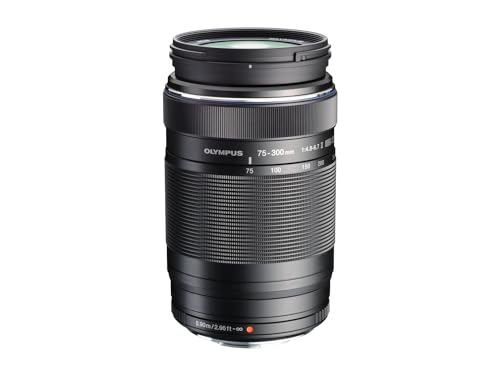
- Olympus M.Zuiko ED 75 300mm F4 8 6 7 II (Overall score: 6.92)
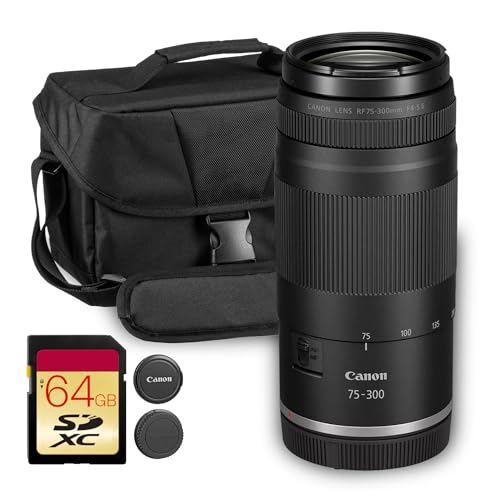
- Canon RF 75 300mm F 4 5 6 (Overall score: 6.25)
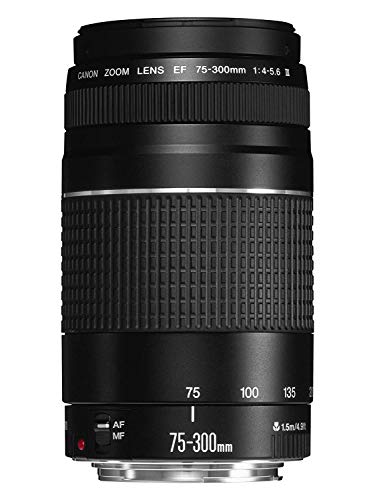
- Canon EF 75 300mm F 4 5 6 III (Overall score: 5.95)
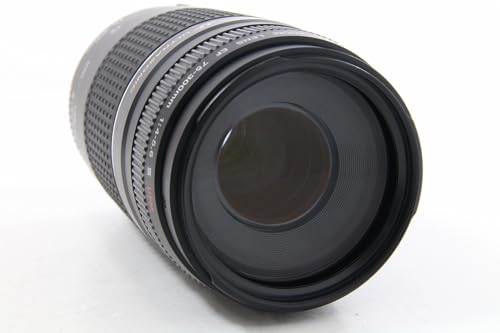
- Canon EF 75 300mm F 4 5 6 III USM (Overall score: 5.63)
What makes a 75–300 mm lens useful?
A 75–300 mm lens is useful because it combines portrait-friendly short telephoto framing with enough reach for outdoor sport, wildlife, aircraft, and distant details. The range is broader than a 70–200 mm lens at the long end, yet these designs are usually lighter and more affordable than professional 100–400 mm or 150–600 mm zooms.
The compromise is speed. Most 75–300 mm lenses use a variable aperture that becomes considerably slower near 300 mm, so they work best in daylight or with stationary subjects. Autofocus and sharpness can also weaken at the longest setting.
For occasional telephoto use, that trade-off is reasonable. A 75–300 mm zoom can be a practical first long lens when budget and portability matter more than low-light action performance.
What are 75–300 mm lenses best suited for?
75–300 mm lenses are best suited to the following uses:
- Daylight wildlife: The 300 mm endpoint provides useful reach for larger animals, zoo photography, and birds at moderate distances. These lenses work best in open daylight because their long-end aperture and entry-level autofocus can struggle at dawn, dusk, or beneath dense tree cover.
- Outdoor family sport: The zoom range can follow action across a football pitch, athletics field, or school sports ground when light supports fast shutter speeds. A body with dependable subject tracking helps compensate for the relatively modest focusing systems found in many lenses of this type.
- Travel and sightseeing: A compact telephoto zoom can capture landmarks, mountain details, boats, and animals without the bulk of a professional super-telephoto lens. Its low weight makes it practical as an occasional second lens, although stabilization is valuable when shooting static subjects near 300 mm.
- Portraits and candid photographs: The short end provides comfortable working distance and background compression for outdoor portraits. Depth of field is less pronounced than with an f/1.8 prime or 70–200 mm f/2.8 zoom, so good subject-to-background distance becomes more important.
- Learning telephoto technique: The affordable range is useful for practicing tracking, panning, support, and long-lens composition before investing in heavier equipment. It also teaches the practical limits of slow apertures and camera shake, helping the photographer decide whether a future upgrade needs better stabilization, autofocus, or reach.
How important are aperture and image stabilization when choosing a 75–300 mm lens?
Aperture is especially important on 75–300 mm lenses because most models become relatively slow at the long end. Variable apertures around f/4–5.6 or f/4.8–6.7 can require higher ISO or slower shutter speeds near 300 mm, precisely where camera shake and subject motion are most visible. For wildlife or sport, the available light must still support roughly 1/1000 second or faster when the subject is moving quickly.
Stabilization improves handheld framing and static-subject sharpness, but many lenses in this class omit it. A camera with in-body stabilization can help with perched animals, distant scenery, and portraits, although the viewfinder and correction quality may vary with older adapted lenses. Neither lens nor body stabilization freezes a running player or flying bird, so moving subjects still depend on shutter speed and autofocus. Prioritize aperture and autofocus for action, and stabilization for static or slowly moving subjects. If the intended camera has no in-body stabilization and most photographs will be taken near 300 mm, a stabilized 70–300 mm alternative can be worth the additional cost.
How important are size and weight when choosing a 75–300 mm lens?
Size and weight are major advantages of 75–300 mm lenses. They are generally easier to carry than brighter professional telephoto zooms and can fit in ordinary shoulder bags or travel kits.
That portability makes handheld framing less tiring and reduces the need for a tripod collar. It also pairs well with smaller crop-sensor bodies, where the narrower field of view provides additional apparent reach.
Light construction can bring compromises. Zoom barrels may extend, weather sealing may be limited, and focus or zoom controls can feel less refined than on premium models.
Balance still matters at 300 mm. Use a steady stance, support the lens barrel with the left hand, and consider a monopod when waiting for wildlife or sport for long periods.
How much do 75–300 mm lenses cost?
New 75–300 mm lenses usually cost about £200-£500, placing them among the more affordable ways to reach 300 mm. Basic DSLR versions tend to be cheapest, while newer mirrorless or better-built models occupy the upper part of the range.
The low price reflects slower variable apertures, simpler construction, and limited stabilization or sealing. These compromises are acceptable for daylight and occasional telephoto use, but frequent sport or wildlife photographers may obtain better autofocus, sharpness, and handling from a more expensive 70–300 mm, 100–400 mm, or 150–600 mm alternative.
Value is strongest when the lens is fully compatible with the camera body and its limitations match the intended use. Paying slightly more for native autofocus and reliable long-end performance is usually wiser than choosing the cheapest nominal 300 mm option.
What should you check before buying a 75–300 mm lens?
Consider the following factors before buying a 75–300 mm lens:
- Mount and sensor format: Confirm the exact native mount, sensor coverage, and autofocus requirements. Some older DSLR lenses depend on a focus motor in the camera body, while adapted versions may lose tracking modes, automatic corrections, or coordinated stabilization. Check compatibility with the specific body rather than assuming every lens with the same mount generation behaves identically.
- Performance near 300 mm: Compare sharpness, contrast, chromatic aberration, and focus consistency at the longest setting, not only around 75–150 mm. A lens that becomes soft or difficult to focus at maximum reach defeats the main reason for choosing this range. Look for results at realistic shutter speeds because camera shake can make an optically adequate lens appear worse than it is.
- Aperture and available light: Expect a variable aperture that may fall to f/5.6, f/6.3, or slower near 300 mm. Confirm that the camera can maintain the shutter speed and ISO needed for the intended wildlife or sport conditions. If most use will be at dawn, dusk, indoors, or beneath tree cover, a brighter and more expensive alternative is usually the safer choice.
- Autofocus behavior: Check motor compatibility, acquisition speed, tracking consistency, focus noise, and performance in low contrast. Entry-level lenses can hunt near 300 mm, and older motors may be unsuitable for video audio or fast action. Minimum focus distance also matters if the lens will be used for flowers, zoo details, or tightly framed outdoor subjects.
- Stabilization strategy: Verify whether the lens has optical stabilization, whether the camera provides in-body stabilization, and whether both systems can work together. Stabilization helps static subjects and composition but cannot replace a fast shutter speed for moving animals or players. Without either system, plan on steady technique, a monopod, or stronger daylight.
- Handling and construction: Assess zoom extension, zoom creep, balance, focus-ring access, hood availability, filter size, and weather protection. Lightweight construction is useful for travel, but the controls should remain predictable while following a subject. Make sure the extended lens fits the intended bag and does not become awkward on a small body.
- Price and alternatives: Compare the complete cost with 70–300 mm, 100–400 mm, and compact 55–300 mm options available for the same mount. A modest price increase can be worthwhile if it adds stabilization, faster autofocus, better 300 mm sharpness, or stronger compatibility with a newer body. Choose the 75–300 mm option when low price and occasional daylight use are the priorities, not simply because its nominal focal range appears long.