
Which brands make the best cordless steam cleaners?
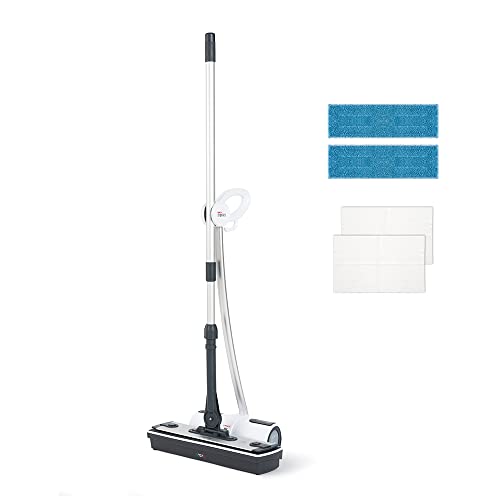
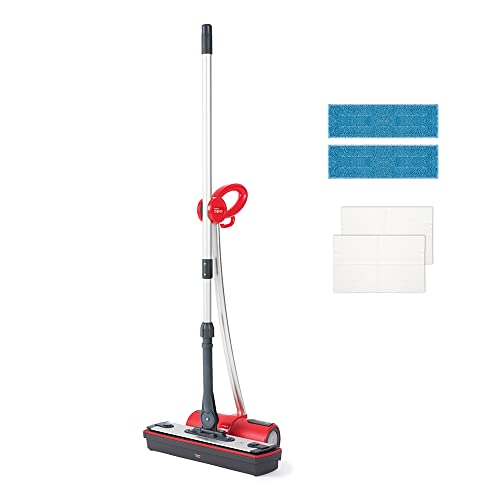
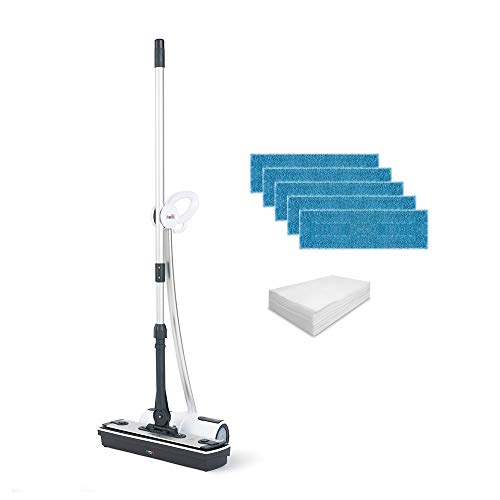
Polti and Tineco make the main cordless steam-cleaning systems, but they approach the category differently. Polti offers lightweight Moppy systems whose cordless mop head receives steam from a mains-powered base, as well as the heavier Rollysteam wet/dry floor cleaner with onboard battery, suction and steam.
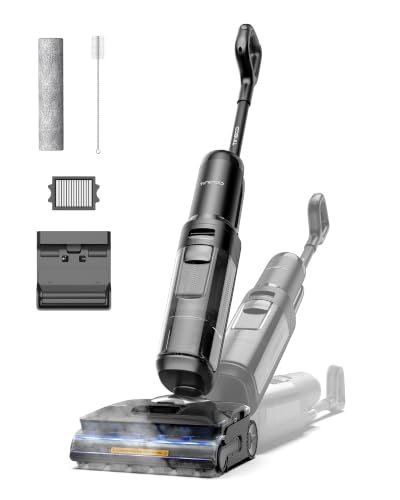
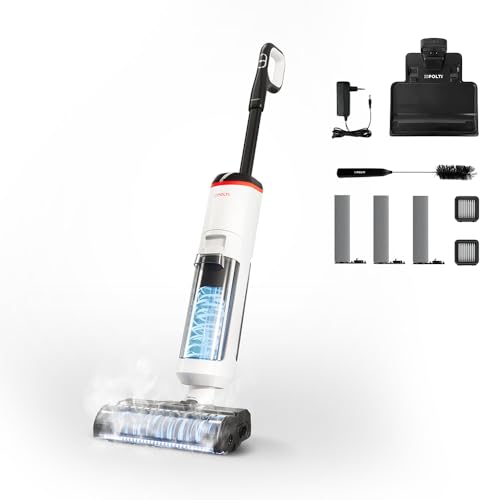
Tineco focuses on premium Floor One wet/dry steam vacuums that combine suction, heated cleaning, self-propelled movement and roller self-cleaning. Choose Polti when a light base-heated mop or broader range matters; choose Tineco when integrated vacuuming and smart floor-care features justify the extra weight and price.
What are the benefits of cordless steam cleaners?
The main benefits of cordless steam cleaners are as follows:
- Cable-free floor movement: the cleaning head can cross open rooms, turn around furniture and reach areas away from a socket without dragging or repositioning a lead. This is most useful on approved sealed floors; it does not automatically make the machine suitable for stairs, cars or outdoor surfaces.
- Faster everyday setup: base-heated mop systems can prepare steam in about 10 seconds, while battery floor cleaners typically need roughly 20–60 seconds. The short start suits frequent kitchen or hallway touch-ups, although the full dock, tank or roller still needs routine preparation.
- Lighter moving mop option: a base-heated system leaves the boiler and water reservoir at the station, so only the light mop head moves across the floor. The trade-off is that the pad must return to the base regularly to receive fresh steam and heat.
- Combined floor cleaning: battery-powered steam vacuums can pick up debris, wash and apply steam in one pass. This can replace separate vacuuming and mopping on compatible hard floors, but the machine is heavier and the dirty-water tank and roller need cleaning afterward.
- Easier edge and furniture access: cordless floor cleaners avoid cable snagging, and some use flexible or lay-flat heads to reach edges and low furniture. Manoeuvrability still depends on total weight, head width and whether the drive system helps move the machine.
How long should a cordless steam cleaner run?
A battery-powered cordless steam cleaner should provide about 30 minutes in its actual steam mode for an ordinary floor session. Claims of 60–90 minutes may apply to quiet, standard or non-steam modes, so compare the published steam-mode figure rather than the largest number on the box.
Around 30–35 minutes is enough for a kitchen, hallway and several adjoining rooms when the cleaner vacuums and washes in the same pass. Larger homes may require a recharge, and a non-removable battery makes the published charging time and long-term replacement support especially important.
Base-heated cordless mops do not have a normal battery-runtime limit because the steam generator remains connected to the mains. Instead, compare how often the pad must return to the station, how quickly it is re-infused with steam and whether the refillable base can support the planned floor area without interrupting the rhythm of cleaning.
How much do cordless steam cleaners cost?
Cordless steam cleaners generally cost about £130-£770. Base-heated cordless mop systems sit around £130-£170, while battery-powered wet/dry steam cleaners are commonly about £400-£500. Premium smart models with stronger suction, self-propelled movement, lay-flat cleaning and heated roller self-cleaning can approach £700-£800.
The higher price is justified only when the cordless architecture matches the job. For a light floor mop, compare base-return frequency, pad cost and storage space; for a battery steam vacuum, compare steam-mode runtime, dirty- and clean-water tank handling, roller maintenance, battery support and whether vacuuming replaces a separate cleaning step.
What else should you consider when choosing a cordless steam cleaner?
Consider the following when choosing a cordless steam cleaner:
- Cordless architecture: decide between a light mop that receives steam from a mains-powered base and a battery machine that generates steam while vacuuming and washing. The first has no normal battery-runtime limit but needs frequent base visits; the second moves independently for the duration of its charge but carries more weight.
- Floor and job suitability: current cordless systems are primarily intended for manufacturer-approved sealed hard floors. Do not assume that cable-free operation makes them suitable for grout, upholstery, cars, stairs or outdoor cleaning unless the model includes the correct handheld tools and explicit surface approval.
- Steam-mode runtime: for an onboard-battery cleaner, aim for about 30 minutes in steam mode; 60–90 minute claims may refer to quieter non-steam settings. A base-heated mop should instead be judged by the time between pad recharging, the speed of each return to the base and how smoothly that fits the floor area.
- Tank system: clean-water capacity is typically about 700–880 ml. Base mops keep that water at the station, while wet/dry steam vacuums may add a separate dirty-water tank that must be emptied after each session; extra capacity is useful only if battery runtime and handling keep pace.
- Weight and movement: light base-mop systems are around 2 kg overall, while battery steam vacuums commonly weigh about 4–6 kg. Self-propelled rollers and flexible heads can make a heavy machine easier to push, but filled weight, stair carrying and low-furniture clearance still need checking.
- Pads, rollers and maintenance: base systems rely on washable pads that must be re-steamed and changed when saturated. Wet/dry models require dirty-water disposal, roller rinsing or self-cleaning and periodic filter or dock care; a self-clean cycle reduces labour but does not eliminate manual cleaning.
- Price, battery and storage support: expect roughly £130-£170 for a base-heated cordless mop and about £400-£800 for an onboard-battery steam vacuum. Check battery-replacement policy, charging or base dimensions, consumable availability and warranty support because these systems depend more heavily on proprietary docks, rollers and electronics than a basic corded mop.