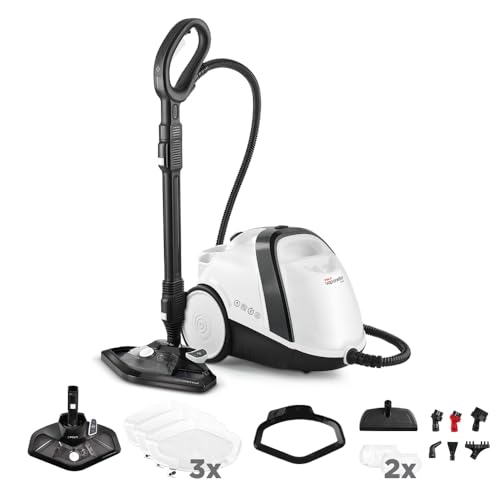
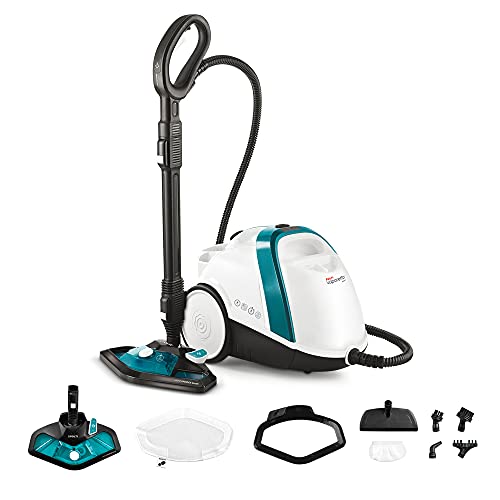
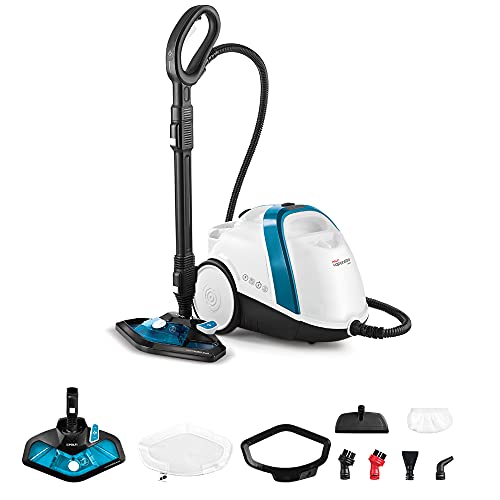
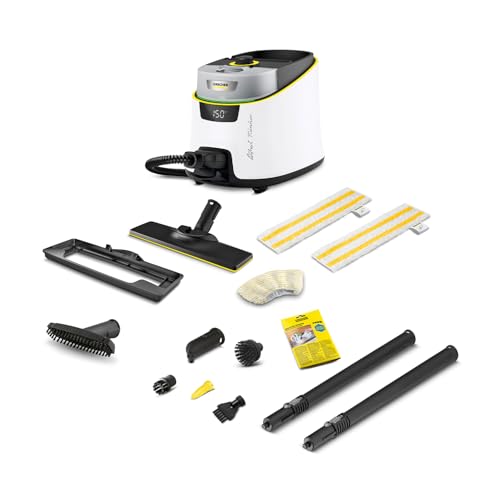
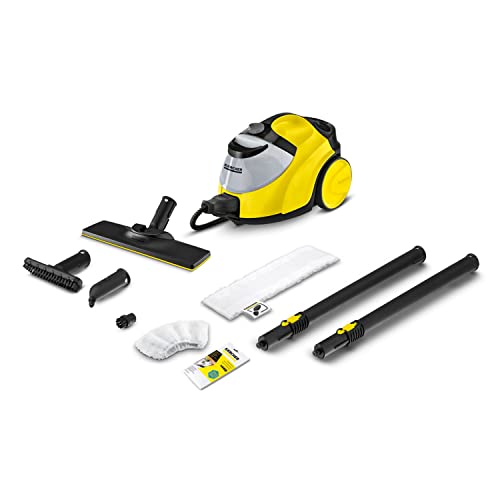
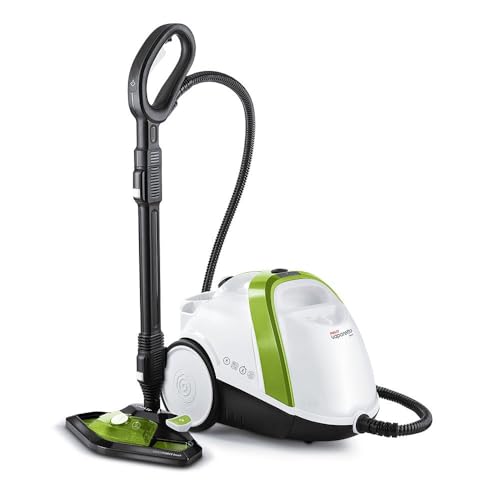
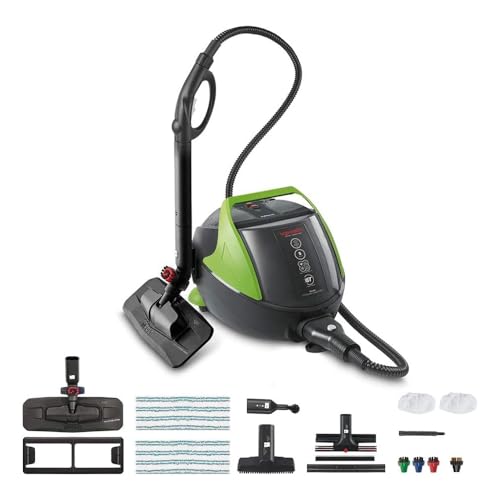
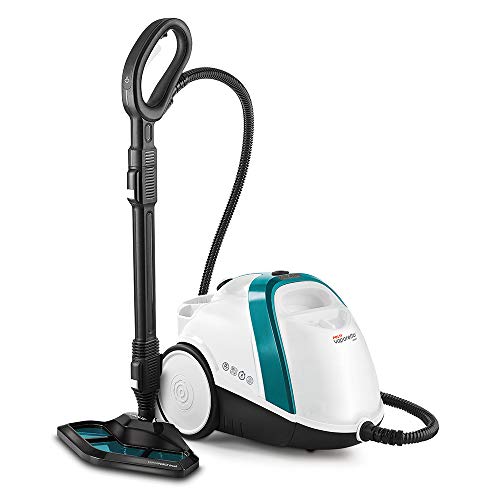
Which brands make the best steam cleaners for floors?
The best steam cleaner brands for floors by overall score are as follows:
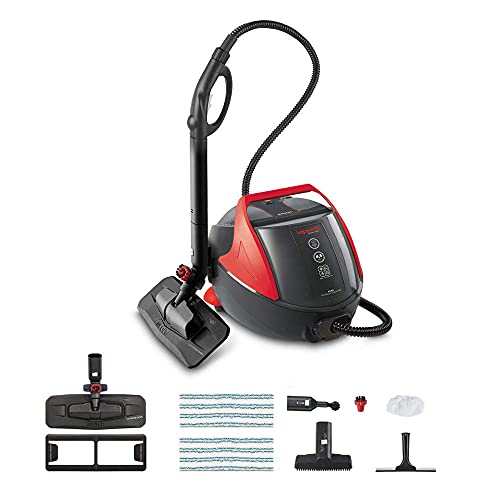
- Polti (Average overall score: 8.2)
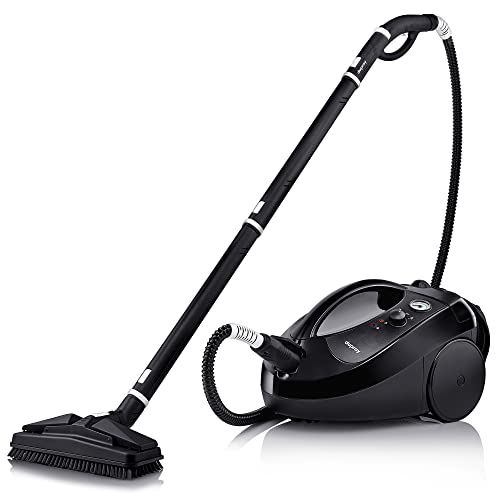
- Dupray (Average overall score: 8.2)
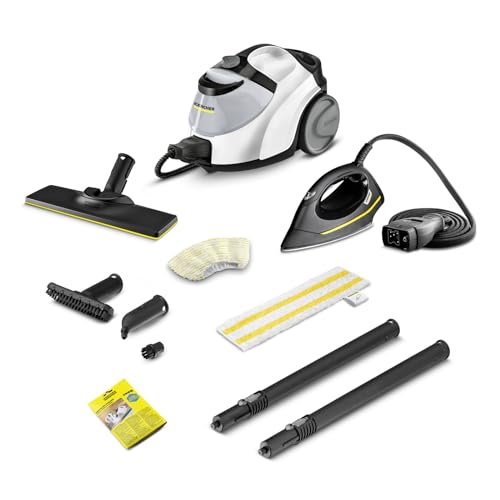
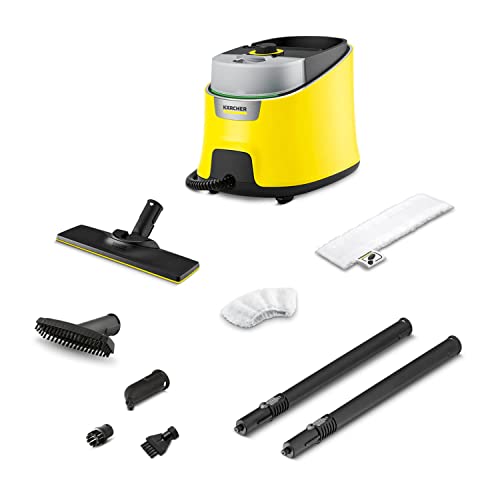
- Karcher (Average overall score: 7.8)
The chart below ranks steam cleaner brands for floors by their overall scores.
[horizontal-chart-13623678897886036581064505597792566593740416227800]
What makes a steam cleaner suitable for floor cleaning?
A steam cleaner is suitable for floor cleaning only when the exact surface is sealed, heat-resistant and explicitly approved for steam. A broad absorbent head should distribute moisture evenly, and adjustable output should let you reduce steam before treating a more sensitive approved finish.
Safe operation requires continuous movement and clean pads. Do not park a hot head in one place, keep using a saturated pad or make repeated wet passes over a stubborn mark; these actions increase the chance of heat damage and force moisture toward joints.
Unsealed or waxed wood, damaged laminate, open seams and lifting vinyl can swell, cloud or lose adhesion. Check the flooring warranty and test a hidden area first, stopping if the finish changes, joints darken or the floor remains visibly wet. Steam loosens surface dirt but cannot repair failed seals or damaged boards.
What floors can steam cleaners clean safely?
The floor types that can be cleaned with steam are as follows:
- Sealed ceramic and porcelain tile: These are usually the most forgiving hard floors when the grout and joints are intact. Use a clean floor pad, keep the head moving and wipe heavy loosened residue rather than repeatedly steaming the same patch.
- Approved sealed natural stone: Some sealed stone can tolerate controlled steam, but marble, limestone and specialist finishes may be sensitive to heat, moisture or worn sealer. Follow the stone or sealer maker's instructions and test a hidden area before cleaning the room.
- Steam-approved vinyl or linoleum: Use low output and avoid damaged edges, lifting seams or soft adhesive. A floor may appear sealed yet still exclude steam under its care or warranty terms, so product-specific approval matters.
- Manufacturer-approved laminate or sealed wood: Only use steam when the flooring manufacturer explicitly allows it, with minimal output and continuous movement. Never steam unsealed, waxed or damaged boards, and stop if joints darken, swell or remain visibly wet.
How much do steam cleaners for floors cost?
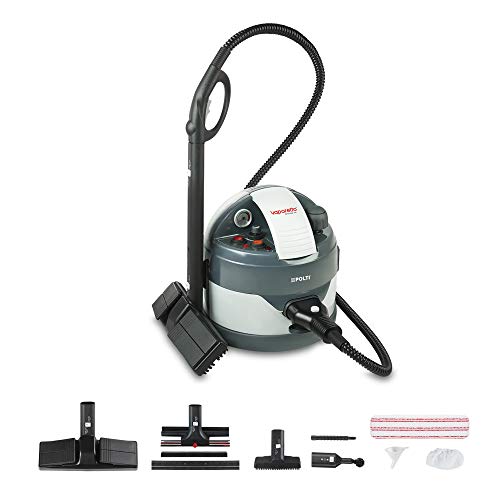
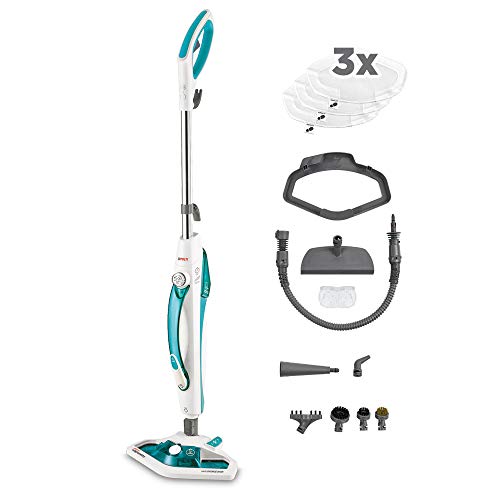
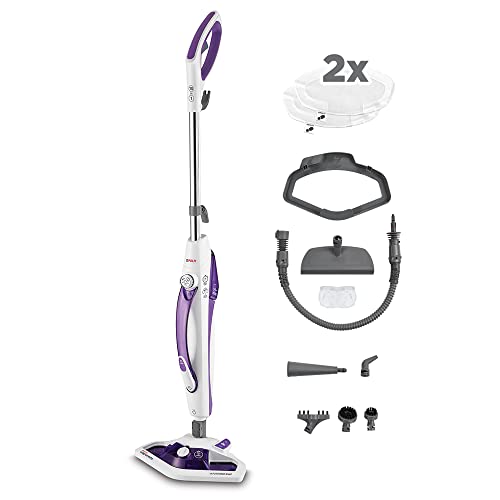
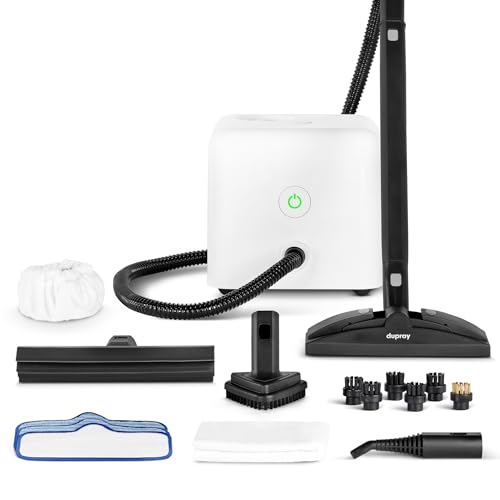
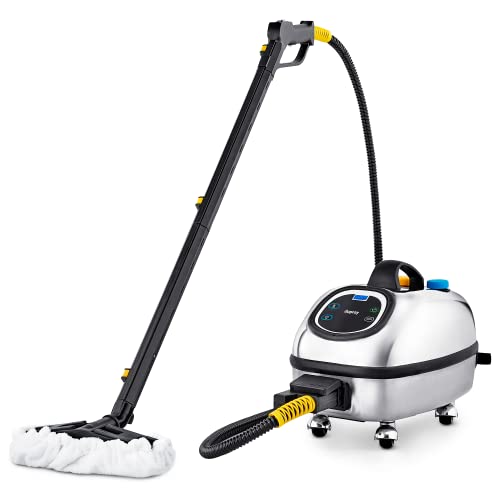
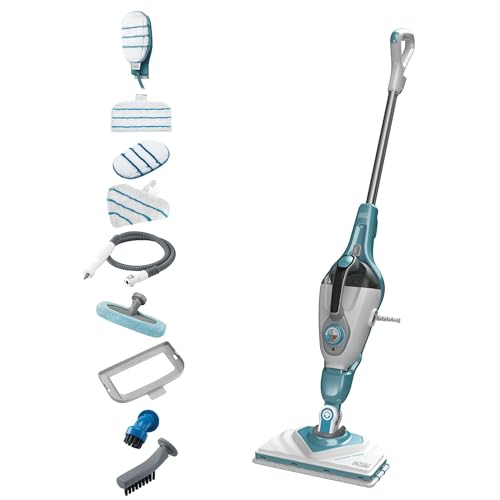
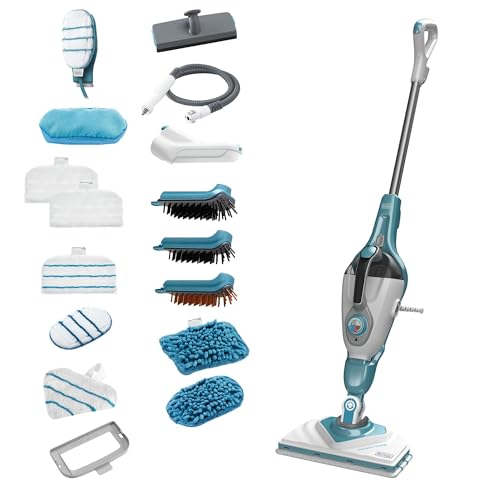
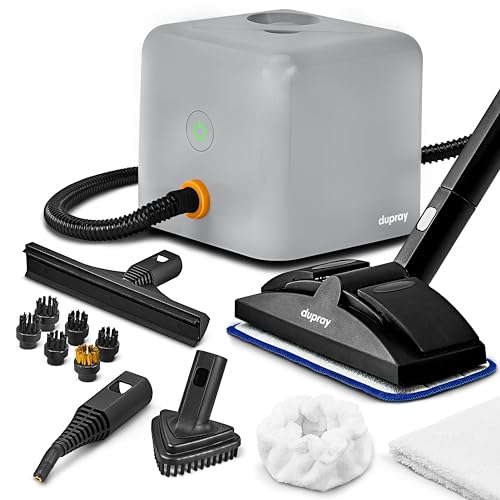
Steam cleaners for floors generally cost about £40-£430. Basic steam mops around £40-£130 suit regular cleaning of approved sealed floors, while models around £130-£220 tend to add better steam control, swivelling, larger tanks or a detachable handheld unit. Canister systems around £200-£400 provide a hose, broader tools and longer working sessions but need more storage space.
Match the format to the home rather than paying simply for more power. A compact mop is enough for a small tiled flat; a canister is easier to justify when several rooms, stairs and edges make a short cord or frequent 300–500 ml refills frustrating. Include replacement pads and descaling supplies when comparing ongoing cost.
The chart below shows the price distribution of steam cleaners suitable for floors.
[vertical-chart-09018287622314636825182498821960466264061485688611]
What else should you consider when choosing a steam cleaner for floors?
Consider the following when choosing a steam cleaner for floors:
- Floor approval: Confirm that the exact tile, stone, vinyl, laminate or wood product permits steam; a sealed appearance alone is not proof. Open joints, failed sealer, lifting edges or warranty exclusions make the surface unsuitable even when the machine has a low setting.
- Cleaning head: A practical head width is about 25–40 cm: narrower heads manoeuvre better in bathrooms, while 35–40 cm heads cover open rooms faster. A swivel joint and a low-profile neck matter around chair legs and cabinets, but the head should still keep the pad evenly in contact.
- Steam and moisture control: Adjustable levels or an on-demand trigger let you use less moisture on sensitive finishes and more on sound tile. Start at the lowest effective level, keep the head moving and change a saturated pad instead of making repeated wet passes.
- Tank and session size: Roughly 300–700 ml suits many steam mops and regular single-floor cleaning; 1–2 litres or continuous refill is more useful across several rooms. Extra capacity reduces stops but increases weight, so compare it with the area normally cleaned in one session.
- Cord, hose and weight: A cord around 5–8 m reduces socket changes, and a canister hose should reach edges without dragging the base across the cleaned floor. Around 2–3 kg is comfortable for a mop; a 4–8 kg canister benefits from wheels, a stable base and an easy carry handle for stairs.
- Heat-up and pads: A mop that heats in about 10–30 seconds suits quick daily use, while a larger boiler may take several minutes but maintain steam longer. Check how many machine-washable pads are supplied and whether replacements remain affordable, because a dirty pad spreads residue.
- Storage and maintenance: A self-standing or parking position, cord storage and a detachable tank make frequent use less awkward. Let pads and the head dry before storage and follow the descaling schedule, especially in hard-water areas where mineral buildup can reduce output.