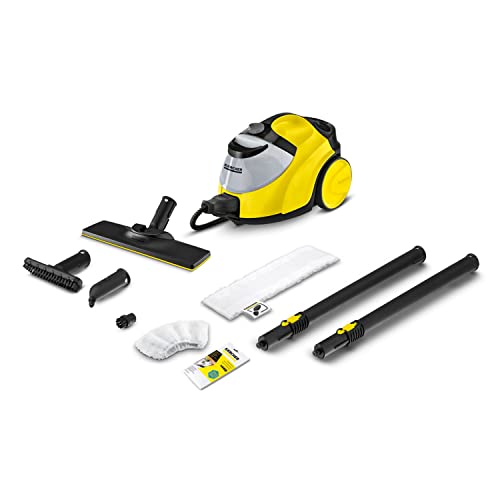
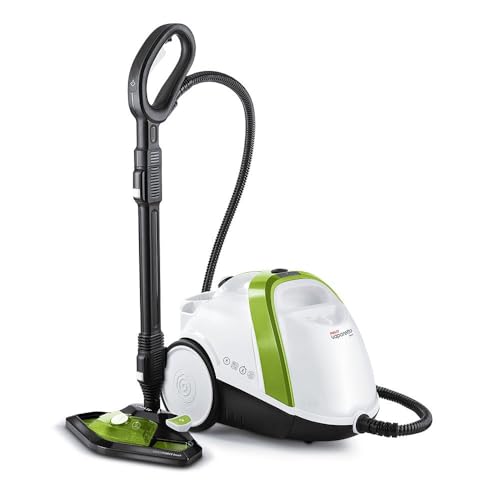
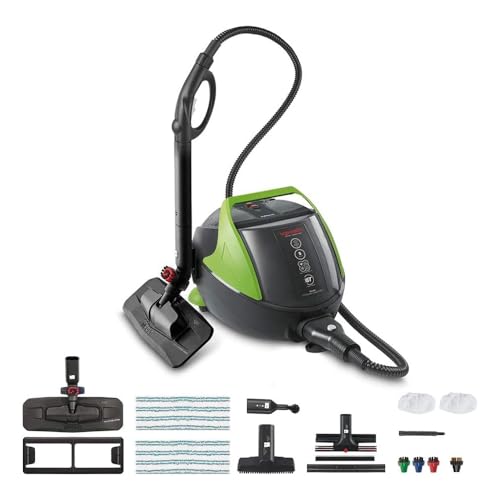
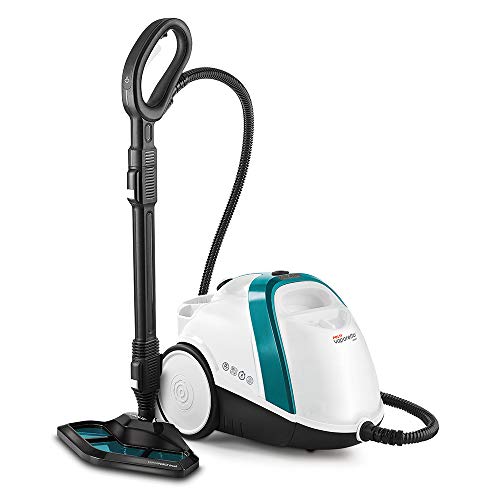
Which brands make the best steam cleaners for tiles?
The best steam cleaner brands for tiles by overall score are as follows:
- McCulloch (Average overall score: 8.3)
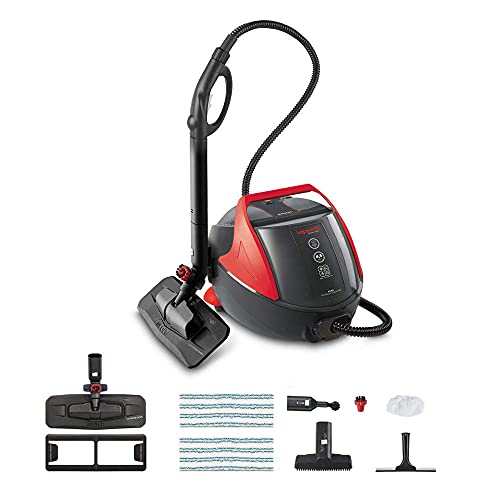
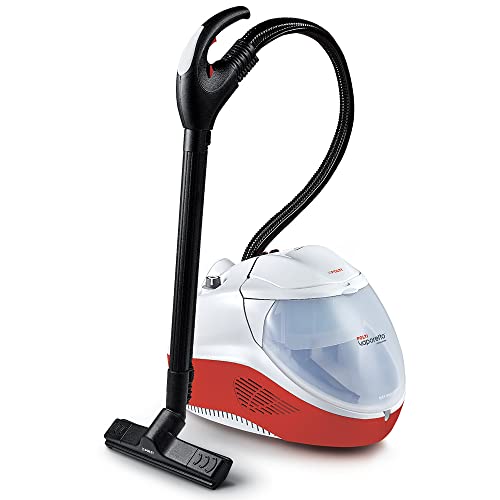
- Polti (Average overall score: 8.3)
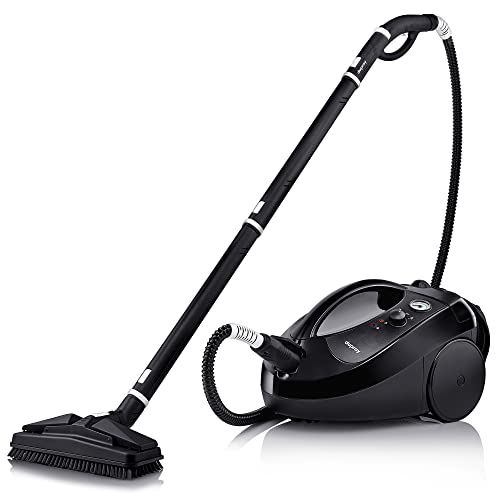
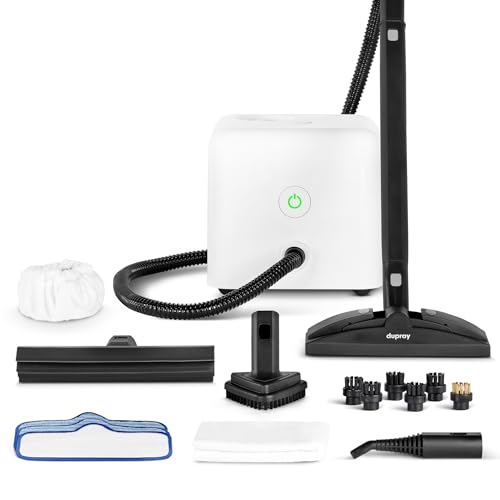
- Dupray (Average overall score: 8.2)
The chart below ranks steam cleaner brands for tiles by their overall scores.

[horizontal-chart-04636675019772717611183532429217334227183625521114]
What makes a steam cleaner suitable for tile cleaning?
A steam cleaner is suitable for tile cleaning when the tile, grout and substrate are sealed, heat-resistant and approved for steam. Use a floor head to distribute moisture across open areas, but switch to a jet nozzle or small nylon brush for joints, corners and the edge behind fixtures. Adjustable output or an on-demand trigger is useful because a strong continuous jet can splash dirty water over the tile, soften old sealant or force moisture into an open joint.
The cleaning technique matters as much as the machine. Vacuum or sweep loose grit first, pre-treat heavy grease where appropriate, move the head in short overlapping passes and wipe the loosened residue immediately. Test a hidden patch that includes both the tile face and grout; a glossy glaze may tolerate heat while natural stone, paint, wax or the joint material changes colour, dulls or absorbs water.
Which tiles and grout can steam cleaners clean safely?
The tile and grout types that can be cleaned with steam are as follows:
- Sealed ceramic and porcelain: These are usually the most forgiving tile surfaces when the joints and substrate are intact. Use a floor head on open areas and a nylon brush or jet nozzle on sound grout, keeping the tool moving to avoid concentrated heat at edges.
- Approved sealed natural stone: Granite, slate and some other stones may tolerate controlled steam, but porous, polished, waxed or impregnated finishes can absorb moisture or lose their appearance. Follow the stone and sealer instructions and test a hidden patch before treating the room.
- Sound cement grout: Steam can soften soap film and surface grease where the joint is intact and firmly bonded. Stop if the grout crumbles, darkens deeply or exposes a gap, because steam cannot replace missing material or failed waterproofing.
- Compatible epoxy grout: Epoxy grout often resists water better than cement grout, but heat tolerance varies by formulation and age. Use moderate output, avoid aggressive scraping and test the actual joint and adjacent tile before wider cleaning.
Painted, unsealed, waxed, cracked or lifting tile should not be steamed unless the coating or tile manufacturer explicitly permits it; heat and moisture can soften paint, enter the substrate or worsen an existing failure.
How much do steam cleaners for tiles cost?
Steam cleaners for tiles generally cost about £40-£430. Handheld models around £40-£90 suit grout lines, splashbacks and small bathrooms.
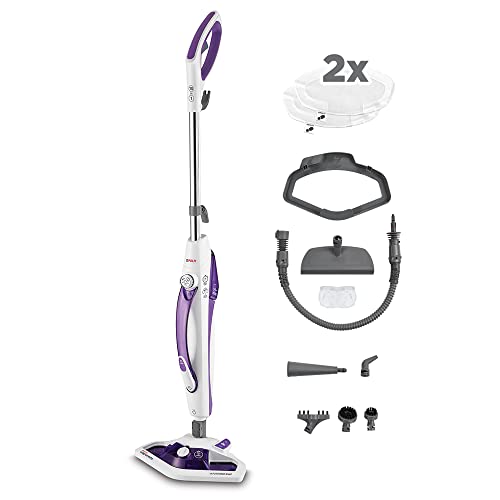
Steam mops around £70-£170 cover open sealed floors faster, while canister systems around £200-£400 add a hose, larger tank and better reach for walls, steps and several rooms.
Choose the format and tool set before paying for pressure. A mop earns its price through floor coverage, and a canister becomes worthwhile when 1–2 litres of capacity, a 1.5–2 m hose and fewer refill stops improve a mixed wall-and-floor job. Include replacement pads and nylon brushes in the comparison.
The chart below shows the price distribution of steam cleaners suitable for tiles.
[vertical-chart-14000355298062088855164584021076465355001262362377]
What else should you consider when choosing a steam cleaner for tiles?
Consider the following when choosing a steam cleaner for tiles:
- Tile, grout and substrate: Confirm that the tile is sealed, the joints are intact and the waterproofing or adhesive layer is sound. Cracks, missing grout, loose sealant and lifting edges need repair first; increasing pressure can force moisture into an existing fault.
- Format and cleaning width: A handheld with a 200–500 ml tank suits wall tile, splashbacks and grout, while a mop head around 25–40 cm is faster on open floors. A canister adds a hose and larger reservoir for mixed jobs but requires more storage and careful movement around steps.
- Pressure and output control: Around 3–5 bar is a useful reference for household grease and soap residue, provided the joint and finish are stable. Adjustable levels or an on-demand trigger let you reduce runoff on polished surfaces and apply focused steam only where the material permits it.
- Tank and working session: Roughly 300–700 ml is practical for a steam mop, whereas 1–2 litres or continuous refill suits several tiled rooms. More capacity reduces stopping but adds weight, so compare it with the area normally cleaned and the safe cool-down procedure for a sealed boiler.
- Brush and pad system: Nylon detail brushes are a sensible starting point for glazed tile and sound grout, while clean washable pads collect residue on open floors. Avoid metal or very stiff brushes on polished finishes or weak joints, and confirm that replacement brushes and pads are readily available.
- Runoff and surface testing: Sweep grit first, work in short sections and wipe dirty water before it enters edges or dries back onto the tile. Test the tile face, grout and sealer separately, especially with natural stone, epoxy joints, painted surfaces or specialist coatings.
- Descaling and drying: Empty the tank, wash pads, rinse brushes and descale according to the water hardness and manufacturer schedule. Let joints and wet-room edges dry before assessing the result, because temporary surface dryness can hide moisture retained in a damaged seam.