
Which brands make the best professional steam cleaners?
The strongest professional steam-cleaner brands to compare are as follows:
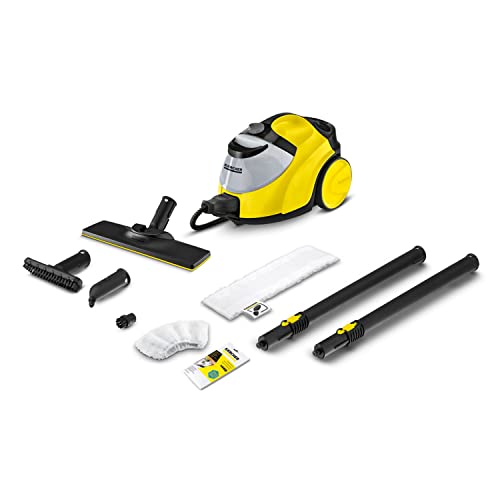
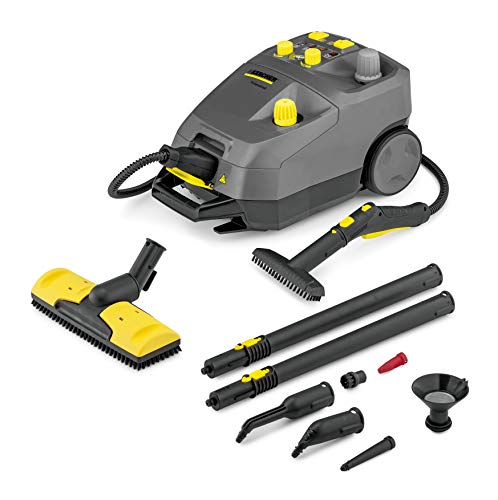
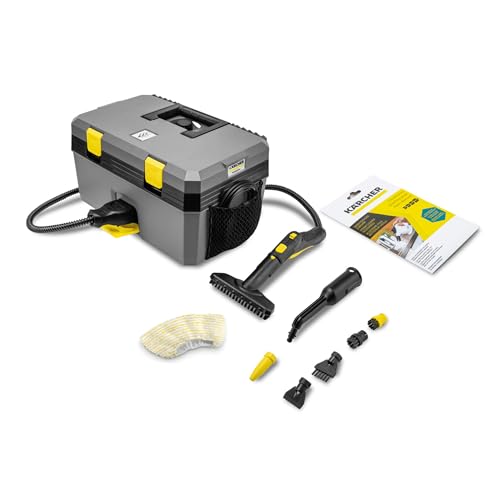
- Karcher: Karcher spans high-output domestic canisters and purpose-built SG or SGV commercial machines, including models designed for repeated floor, washroom and hygiene work. The commercial range offers stronger service and accessory support, but its weight and price rise sharply at the SGV end.
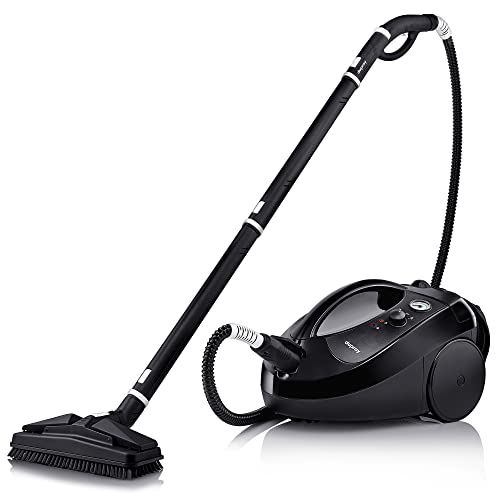
- Dupray: Dupray focuses on high-capacity canister systems with long steam sessions, broad accessory kits and metal-boiler construction on many models. It is attractive for detailers and cleaning contractors who value versatile tools, although buyers should confirm local parts, voltage and service arrangements.
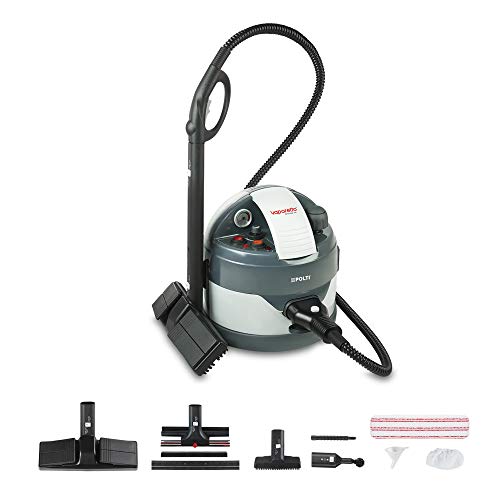
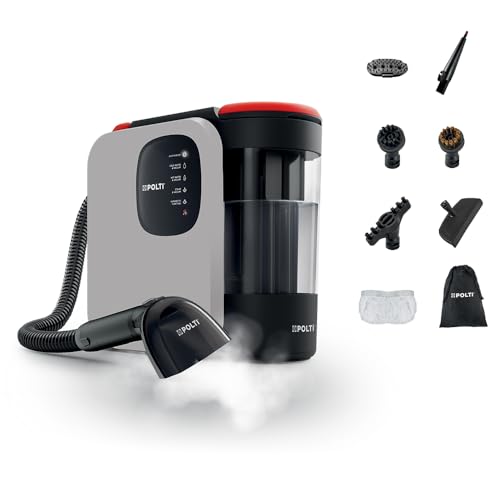
- Polti: Polti's Vaporetto and professional-oriented canisters provide large boilers, adjustable steam and a wide household-to-light-commercial tool ecosystem. They can offer strong value for intermittent professional work, but not every Vaporetto is designed for an all-day duty cycle.
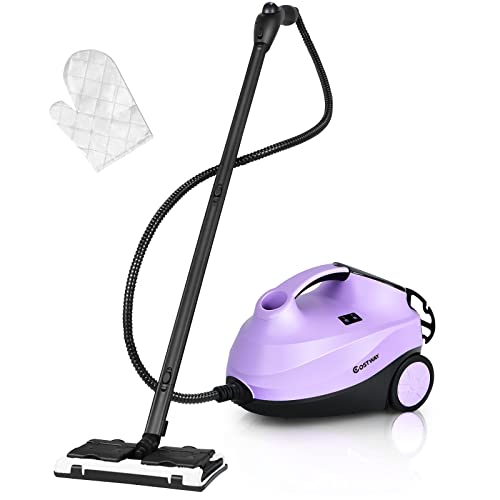
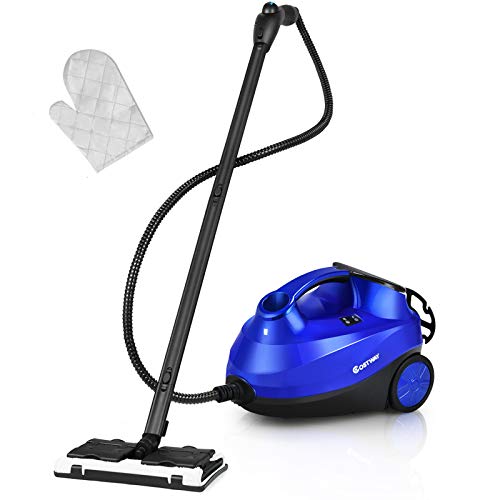
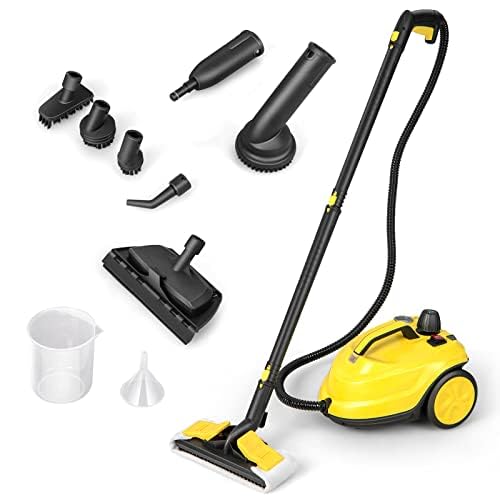
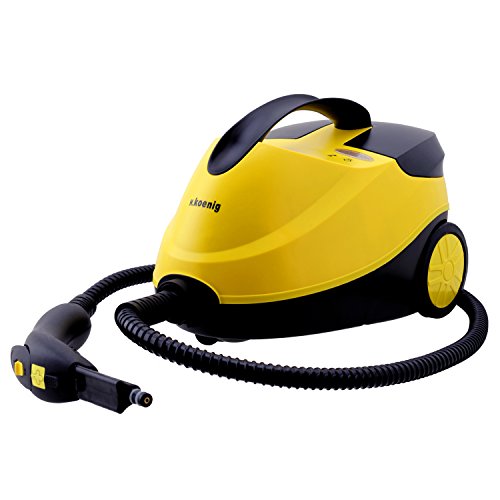
- Costway: Costway sells inexpensive 1.5–1.8 litre, 2,000 W canisters that meet useful capacity and power baselines for occasional paid jobs. They are a budget entry point rather than a direct substitute for a repairable commercial platform, so warranty response, hose durability and spare parts deserve extra scrutiny.
What makes a steam cleaner suitable for professional use?
A professional steam cleaner is suitable for commercial work when it can deliver repeatable steam for the expected shift and recover quickly between tasks. A 1.5 litre or larger tank and at least 2,000 W are useful starting points, but neither figure proves that the machine can sustain a paid workload.
Commercial suitability also depends on safe filling, durable hoses and couplings, pressure or temperature indication and replaceable wear parts. The repair route for seals, brushes and pads matters because a minor failed component can otherwise cause expensive downtime.
Match the machine to the actual contract. Hotel bathrooms, vehicle interiors, food-preparation areas and large tiled floors need different moisture control, reach and attachments, so one high pressure figure cannot describe suitability across all jobs.
Handling completes the assessment: staff must be able to push, lift, store and descale the cleaner safely. A slightly smaller unit with steady output and good tools can produce more useful work than a heavier machine that causes fatigue, dirty runoff or long cooling pauses.
Which features matter most for professional steam cleaning?
The most important professional steam-cleaning features are as follows:
- Boiler, tank and duty cycle: A 1.5–3 litre capacity is a practical range for repeated rooms, but continuous refill or a fast recovery cycle matters more than nominal volume during a long shift. Confirm whether the operator can top up safely without depressurising and waiting for a sealed boiler to cool.
- Sustained pressure and flow: Around 4–6 bar and roughly 40–100 g/min provide useful reference points for commercial canisters when the figures are measured comparably. Prioritise stable output after several minutes and adjustable delivery, since a high peak pressure that quickly falls is poor for repeatable work.
- Power and recovery: Input around 2,000–2,500 W can support a substantial boiler, but wattage alone does not reveal steam quality or recovery time. Compare cold start, between-task recovery and performance with the hose and tool attached rather than relying on the heater rating.
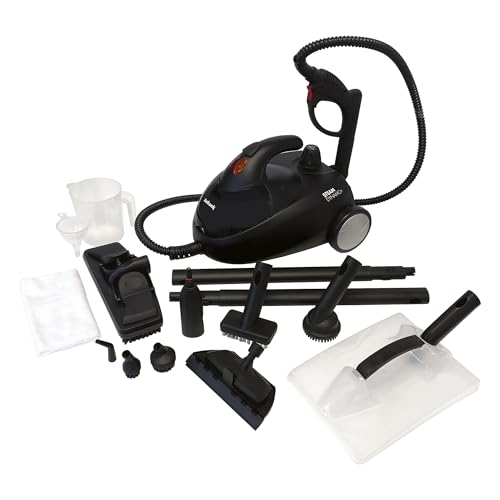
- Commercial reach and tools: A heat-resistant hose around 1.5–3 m and a cord around 5–8 m reduce socket changes and keep the base out of wet work areas. The supplied floor head, jet nozzle, brushes, squeegee and fabric tool should match the actual contract, with replacements sold individually.
- Mobility and operator safety: Wheels, a stable parking position, insulated controls, a locking filler cap and clear pressure indication are important on machines commonly weighing 5–10 kg or more. Test stair carrying, hose storage and turning space before assigning the unit to repeated room-to-room work.
- Maintenance and serviceability: Replaceable seals, hoses, brushes and pads, documented descaling and an accessible repair route reduce downtime. A commercial machine should have a known parts lead time and warranty process, because one failed connector can otherwise remove the whole unit from service.
How much do professional steam cleaners cost?
Professional-capable steam cleaners generally cost about £300-£4,300, while purpose-built commercial machines typically start around £600. Heavy domestic or light-duty systems around £300-£600 can suit intermittent paid work; commercial canisters around £600-£1,300 add more durable boilers, controls and fittings, and specialist extraction or steam-vacuum machines can reach £1,700-£4,300.
Compare operating cost as well as purchase price. Brushes, seals, hoses, filters, descaling, service travel and pressure-recovery downtime can outweigh a small saving on the machine itself. For daily contracts, repairable construction and rapid parts support usually justify more of the budget than extra peak wattage or an oversized accessory bundle.
The chart below shows the price distribution of professional steam cleaners.
[vertical-chart-08237694505605229907123313260769158538050416047502]
What else should you consider when choosing a professional steam cleaner?
Consider the following when choosing a professional steam cleaner:
- Shift workload: Estimate rooms, vehicles or square metres per shift and the longest uninterrupted cleaning block. A machine for two hotel bathrooms has a different duty cycle from one used continuously across kitchens, clinics or a detailing bay, so specify acceptable refill and recovery downtime before comparing models.
- Tank and refill architecture: Use about 1.5–2 litres as a minimum practical capacity for repeated work, with 2–3 litres or continuous refill preferable for longer routes. Check whether topping up requires depressurising and cooling, because a sealed boiler can turn a five-minute water stop into a much longer interruption.
- Sustained steam output: Compare working pressure and steam flow after several minutes, not only the initial peak; around 4–6 bar and 40–100 g/min are useful starting references when test methods are comparable. Adjustable delivery is important when the same team moves between grout, sealed floors, glass and moisture-sensitive surfaces.
- Tools and task coverage: List every contracted surface and confirm the exact floor head, jet nozzle, detail brushes, squeegee and fabric tool needed. Replacement brushes and covers should be individually available, because a powerful boiler cannot complete a job safely with a worn or unsuitable attachment.
- Reach and transport: A 1.5–3 m hose and 5–8 m cord reduce repositioning, while wheels and a stable base help with a 5–10 kg machine on one level. For stairs or vehicles, test the loaded carry weight, handle position, hose storage and whether the unit fits through the actual working space.
- Water, cleaning and daily maintenance: Follow the permitted water type and descaling interval, particularly in hard-water areas where scale lengthens recovery and damages heaters or valves. Time the end-of-shift drain, wipe-down and tool washing so maintenance labour is included in the operating plan.
- Safety, service and downtime: Require a locking filler system, insulated controls, clear pressure indication and a written cool-down procedure, then train staff for each surface and attachment. Check local repair coverage, parts lead times, warranty response and backup-machine needs; service delay is a real commercial cost when the cleaner is revenue-producing equipment.