Gli altoparlanti portatili Sony sono validi?
Gli altoparlanti portatili Sony hanno un punteggio complessivo medio di 7.9, si collocano al n. #4 tra i marchi di altoparlanti portatili comparabili e hanno una valutazione degli utenti di 9.2, che li posiziona al n. #13 in base alle recensioni degli utenti.
Gli altoparlanti portatili Sony sono una scelta forte quando vuoi bassi regolabili, modelli da esterno resistenti all’acqua o un percorso dai piccoli speaker personali ai sistemi da festa ULT e XV illuminati. Sony offre anche insoliti formati in vetro e per l’audio domestico.
Gli altoparlanti portatili Sony sono più difficili da scegliere perché le famiglie SRS, XB, XE, XG, XV, RA, LSPX e ULT si sovrappongono tra le generazioni. Metodi di collegamento, codec, USB-C, Wi-Fi e funzioni per microfono richiedono quindi controlli a livello di singolo modello.
Il grafico seguente confronta i marchi di altoparlanti portatili in base al punteggio complessivo medio.
[horizontal-chart-16826570532110669241166463899741574182283116530753]
Quali sono i principali vantaggi degli altoparlanti portatili Sony?
I principali vantaggi degli altoparlanti portatili Sony sono i seguenti:
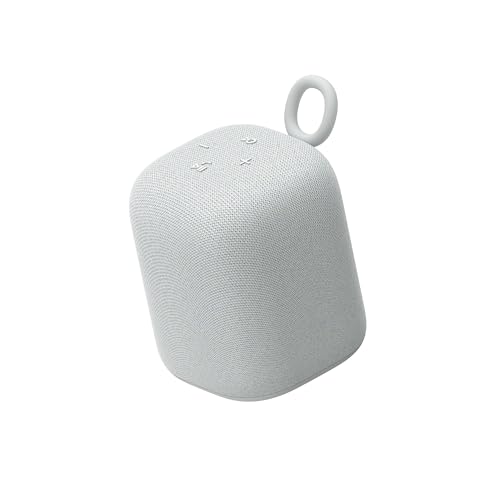
- Ampia scelta di prodotti: Sony copre speaker compatti da viaggio, modelli da esterno di medie dimensioni, sistemi da festa ad alta potenza, speaker in vetro, speaker da collo e progetti Wi-Fi per la casa. Pochi marchi offrono così tanti formati distinti.
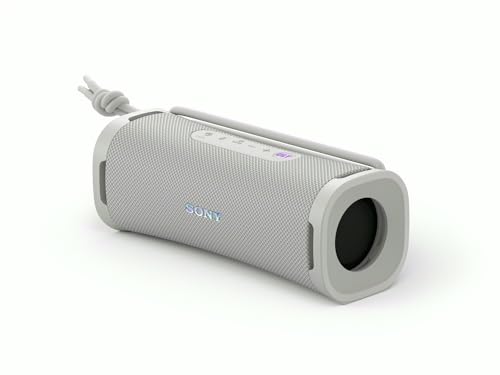
- Batteria e modelli da esterno: molte famiglie portatili attuali combinano circa 12–30 ore di riproduzione dichiarata con la resistenza all’acqua. ULT Field e alcuni modelli SRS sono adatti a gite e giardini senza passare a una torre da festa.
- Regolazione del suono: le app Sony offrono comunemente EQ, modalità bassi, illuminazione e comandi di gruppo. LDAC è presente su alcuni modelli per un Bluetooth a bitrate più elevato quando anche la sorgente lo supporta.
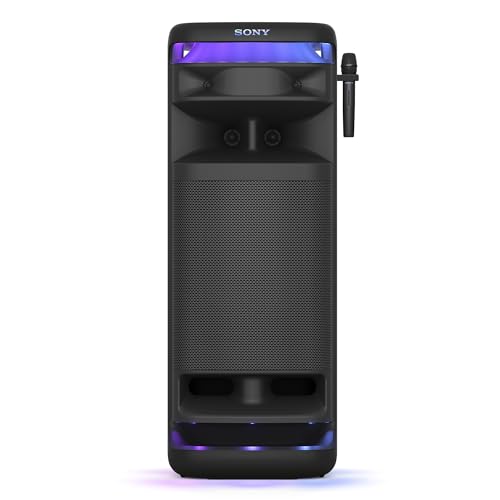
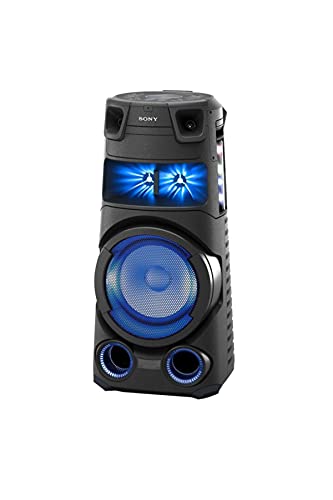
- Funzioni per feste: i prodotti XV, XP, XG e ULT Tower possono aggiungere illuminazione, ingressi per microfono, collegamento di gruppo e bassi potenti. La gamma comprende sia speaker da festa alimentati a batteria sia sistemi più grandi pensati per la rete elettrica.
- Design specializzati distintivi: gli speaker in vetro LSPX danno priorità ad atmosfera e design, mentre i prodotti RA puntano su un’ampia copertura della stanza. Queste opzioni vanno oltre la formula del cilindro robusto usata dalla maggior parte dei concorrenti.
Quali sono i principali svantaggi degli altoparlanti portatili Sony?
I principali svantaggi degli altoparlanti portatili Sony sono i seguenti:
- Gamma di modelli confusa: Sony usa molti prefissi e ha sostituito le famiglie EXTRA BASS con il marchio ULT più recente. Prezzi simili possono nascondere differenze notevoli in portabilità, taratura e funzioni dell’ecosistema.
- Enfasi sui bassi: le modalità ULT e i vecchi modelli XB possono coprire voci o dettagli nelle stanze piccole. L’EQ dell’app aiuta, ma chi cerca un suono neutro dovrebbe ascoltare con il potenziamento dei bassi disattivato.
- Collegamento legato alla generazione: Wireless Party Chain, Party Connect, abbinamento stereo e le modalità di gruppo più recenti non sono universalmente compatibili. Due speaker Sony possono condividere un’app e tuttavia non riuscire a collegarsi.
- Connessioni non uniformi: Wi-Fi, LDAC, AUX, USB-C, audio USB, ingresso per microfono e funzione power bank variano tra i modelli. I prodotti premium più vecchi possono usare una ricarica obsoleta nonostante il prezzo originale elevato.
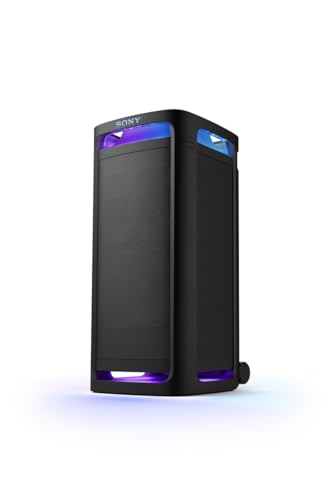
- Portabilità dei modelli grandi: i sistemi XV e ULT Tower possono pesare decine di chilogrammi e richiedere la rete elettrica. Le ruote facilitano lo spostamento, ma non trasformano uno speaker da eventi in un modello da viaggio.
Chi produce gli altoparlanti portatili Sony?
Gli altoparlanti portatili Sony sono prodotti da Sony Corporation all’interno di Sony Group Corporation, il gruppo giapponese di tecnologia e intrattenimento fondato nel 1946. L’azienda è nata a Tokyo come Tokyo Telecommunications Engineering Corporation e ha adottato il nome Sony con la sua espansione internazionale.
Sony Group Corporation ha sede a Minato, Tokyo. Sony Corporation gestisce i prodotti di elettronica e tecnologia per l’intrattenimento, mentre il gruppo più ampio comprende anche musica, cinema, videogiochi, imaging e semiconduttori.
Sony sviluppa acustica, elaborazione wireless, design industriale, app e funzioni dell’ecosistema degli speaker portatili attraverso la propria organizzazione elettronica e partner produttivi globali. L’esperienza in cuffie, televisori, audio professionale e musica aiuta a spiegare la forte attenzione della gamma a codec, elaborazione del segnale, modalità bassi e integrazione nelle feste.
Quali sono le principali serie di altoparlanti portatili Sony?
Le principali serie di altoparlanti portatili Sony sono le seguenti:
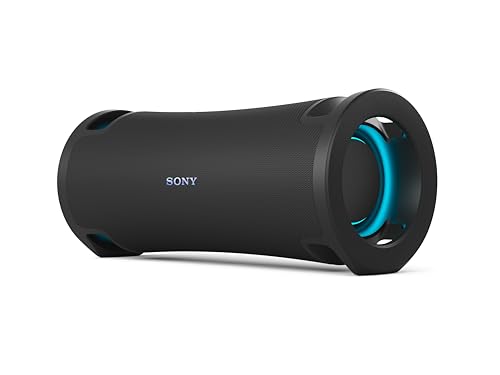
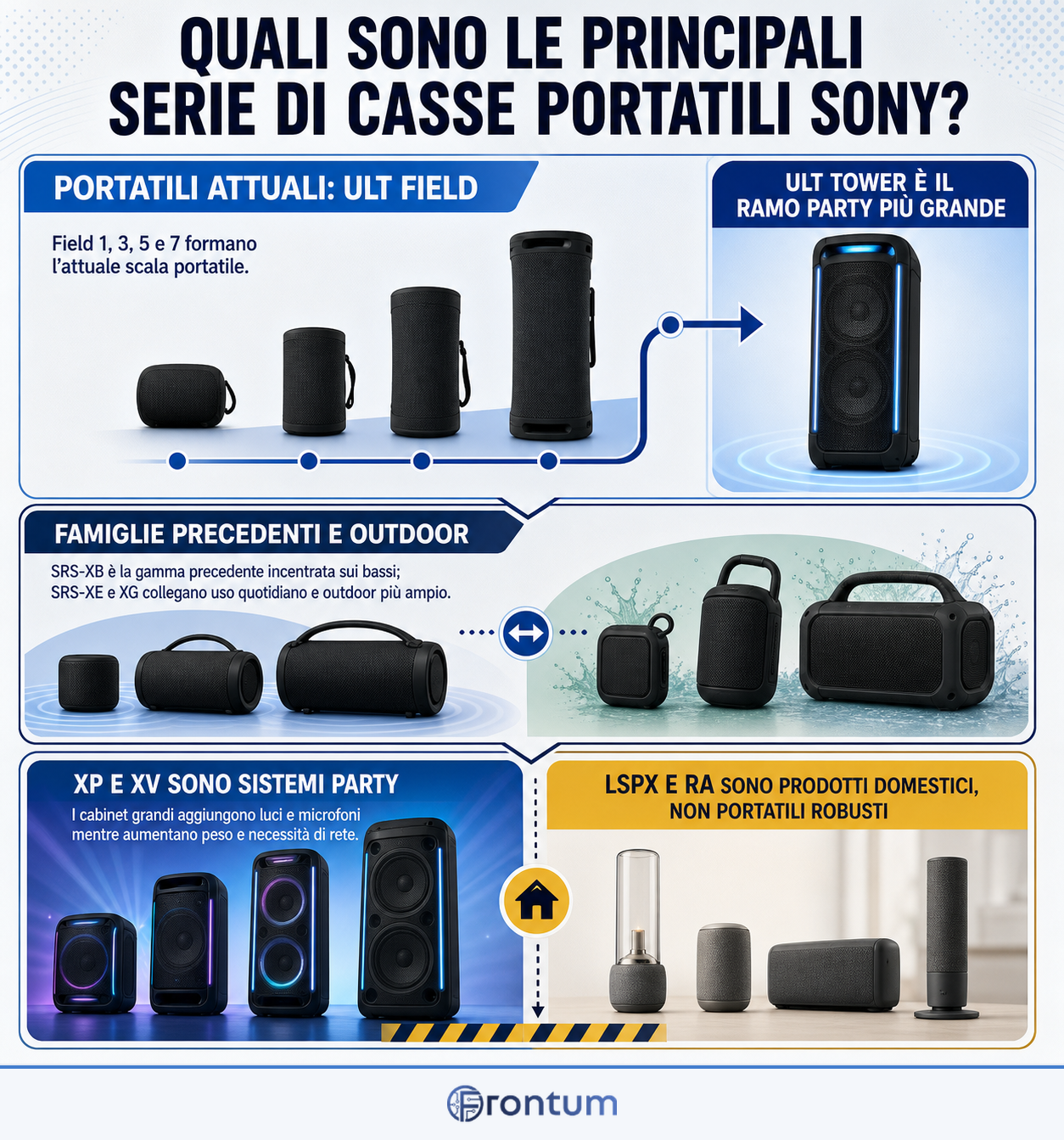
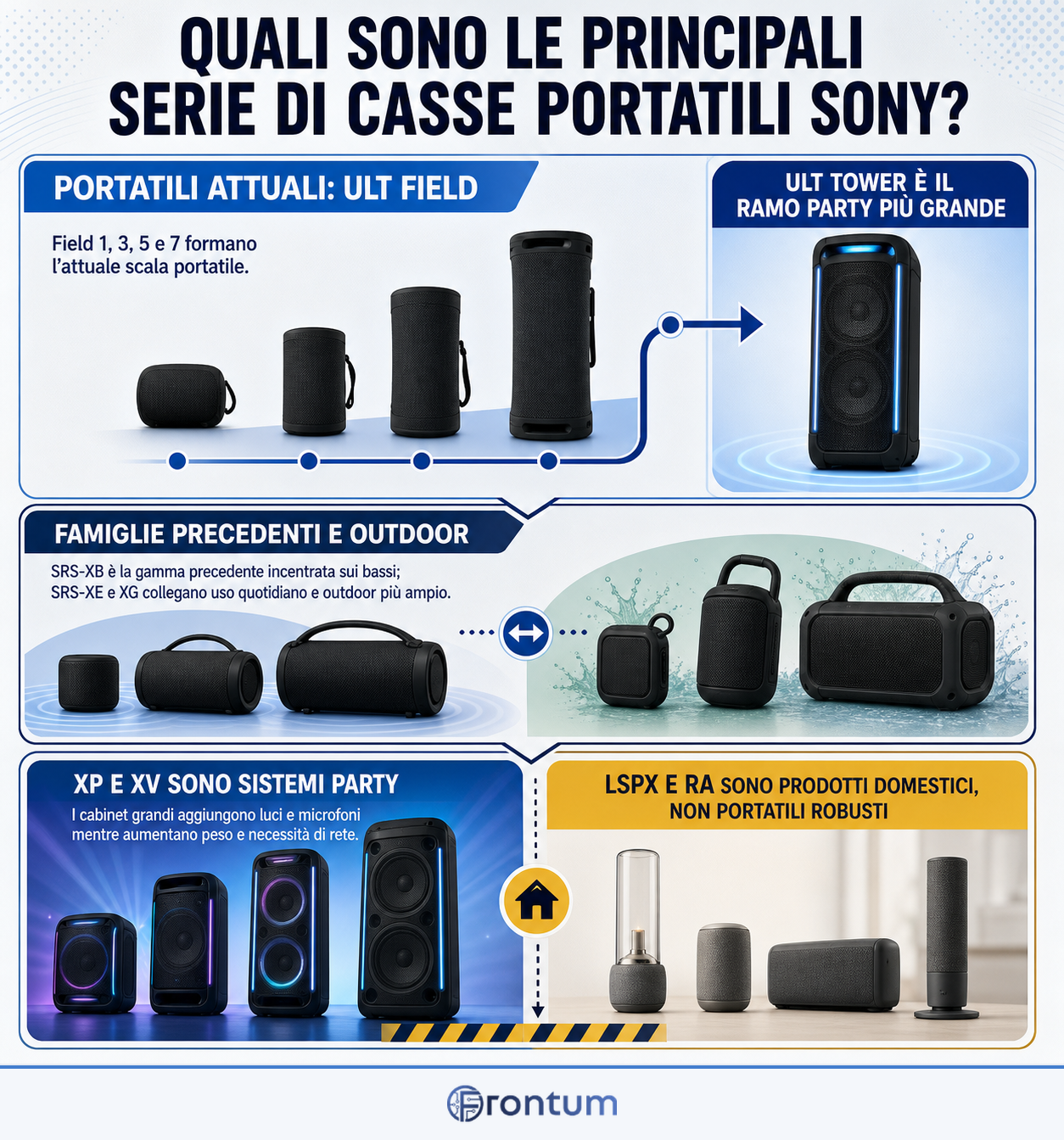
- ULT Field e ULT Tower: ULT Field 1, 3, 5 e 7 formano l’attuale gamma portatile, mentre i modelli ULT Tower sono rivolti a feste molto più grandi. Il pulsante ULT enfatizza bassi e impatto invece di una taratura neutra.
- SRS-XB EXTRA BASS: XB10 fino a XB43 e i modelli correlati sono le vecchie famiglie compatte e di medie dimensioni incentrate sui bassi. Molti restano validi, ma supporto a ricarica, app e collegamento dipendono dalla generazione.
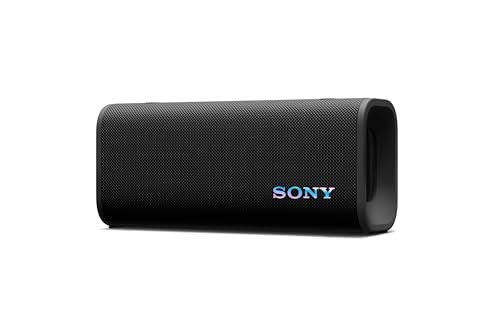
- SRS-XE e XG: XE200 e XE300 favoriscono la portabilità verticale all’aperto, mentre XG300 e XG500 offrono batterie e potenza maggiori. Colmano il divario tra speaker quotidiani e prodotti orientati alle feste.
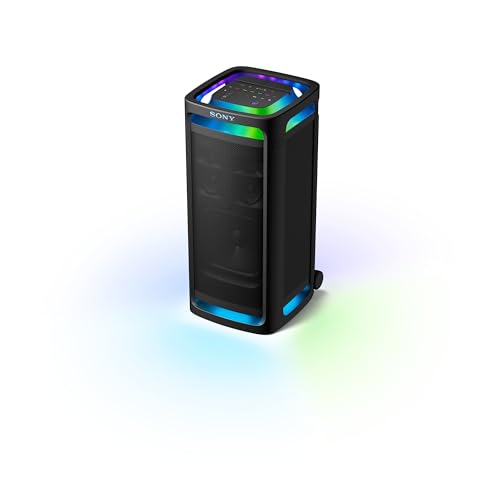
- Sistemi da festa XP e XV: XP500, XP700, XV500, XV800 e XV900 combinano grandi cabinet con illuminazione, comandi da festa e uso del microfono. Peso e requisiti di alimentazione aumentano rapidamente lungo la gamma.
- LSPX e RA: gli speaker in vetro LSPX sono prodotti d’ambiente guidati da design, mentre RA3000 e RA5000 puntano a un suono ampio per gli ambienti domestici. Sono modelli specializzati da rete elettrica o per la casa, non speaker rugged a batteria.
Quanto costano gli altoparlanti portatili Sony?
Gli altoparlanti portatili Sony costano generalmente circa 40–1.100 €. I modelli compatti SRS-XB o ULT Field 1 si collocano spesso intorno a 40–120 €, i prodotti Field, XE o XG di medie dimensioni intorno a 130–350 € e i sistemi da festa XV o XP più vecchi intorno a 250–600 €.
Le torri ULT e i design premium LSPX o RA possono arrivare indicativamente a 600–1.100 €. Il prezzo da solo non identifica l’uso: un costoso speaker in vetro o per la casa può offrire meno resistenza all’acqua e mobilità a batteria rispetto a un ULT Field più economico, mentre una torre da festa fa pagare potenza e comandi, non la facilità di trasporto.
Come si confrontano gli altoparlanti portatili Sony con i modelli JBL?
Gli altoparlanti portatili Sony si confrontano con i modelli JBL nelle seguenti aree:
- Suono ed EQ: Sony offre modalità bassi potenti e ampie regolazioni nell’app, mentre JBL presenta di solito una sonorità del marchio subito energica. Sony premia la regolazione; JBL è spesso più semplice appena tolto dalla confezione.
- Chiarezza della gamma: JBL ha una scala più lineare da Clip e Flip passando per Charge, Xtreme e Boombox. Sony offre più formati, ma i nomi SRS, XB, XE, XG, XV, LSPX, RA e ULT richiedono più ricerca.
- Modelli da esterno: entrambi i marchi offrono molti speaker resistenti all’acqua e opzioni con lunga autonomia. JBL è più facile da confrontare per dimensioni, mentre Sony può aggiungere LDAC, dispersione insolita o un EQ più profondo su alcuni modelli.
- Sistemi da festa: JBL PartyBox offre prodotti per eventi, illuminazione e opzioni per microfono organizzati in modo più chiaro. ULT Tower e XV di Sony competono con modalità bassi, controllo dall’app e collegamento per feste, ma hanno una nomenclatura meno intuitiva.
- Uso domestico e specializzato: Sony fornisce speaker in vetro, da collo e domestici a dispersione ampia che JBL raramente eguaglia. JBL offre spesso un valore migliore quando serve semplicemente uno speaker Bluetooth robusto di dimensioni note.
Cosa dovresti considerare scegliendo il miglior altoparlante portatile Sony?
Quando scegli il miglior altoparlante portatile Sony, considera i seguenti fattori:
- Dimensioni, potenza e area d’ascolto: ULT Field 1 pesa circa 650 g, offre 30 W e 12 ore di autonomia; Field 3 pesa circa 1,2 kg e ha un’autonomia dichiarata di 30 ore; Field 7 arriva a circa 6,3 kg, 100 W e 30 ore. I sistemi XV e ULT Tower possono pesare circa 11–30 kg, quindi confronta la potenza pulita alla distanza prevista: un Field o XG portatile è spesso più pratico di una Tower, a meno che servano bassi da evento.
- Protezione dall’acqua e gestione: Field, XE, XG e alcune generazioni XB offrono combinazioni diverse di resistenza all’acqua, alla polvere, alla ruggine o agli urti, mentre i prodotti XV, RA e LSPX sono soprattutto modelli da interno protetti. Verifica il codice IP completo e i requisiti dei copriporte sul modello esatto invece di trasferire il codice da un modello più nuovo con un nome simile.
- Batteria e ricarica: i modelli compatti XB100 e XB13 arrivano a circa 16 ore, molti speaker XB/XE di medie dimensioni offrono circa 12–24 ore e i modelli XG o ULT Field arrivano comunemente a circa 25–30 ore. Preferisci almeno 12 ore per le gite giornaliere e circa 24 ore per i fine settimana, poi confronta allo stesso volume con potenziamento dei bassi e illuminazione attivi e controlla USB-C, velocità di ricarica e limiti dell’uscita solo da rete elettrica.
- Bassi, illuminazione e ingressi da festa: i modelli ULT e i vecchi EXTRA BASS offrono un’enfasi maggiore sulle basse frequenze, ma effetto e controllo EQ variano con la generazione; i modelli XV e Tower possono aggiungere illuminazione, microfoni o funzioni karaoke. Scegli queste caratteristiche solo quando corrispondono all’uso previsto, perché aggiungono peso e possono ridurre l’autonomia senza migliorare la nitidezza delle voci.
- App, codec e collegamento degli speaker: Sony Music Center, Fiestable, abbinamento stereo, Party Connect e le modalità di collegamento più recenti dipendono dalla generazione, mentre il supporto dei codec può andare dal semplice SBC ad AAC o LDAC. Conferma app esatta, compatibilità del telefono, numero massimo di unità collegate e possibilità reale di abbinare due famiglie Sony diverse prima di acquistare pensando di integrare uno speaker esistente.
- Modelli specializzati e vecchi: gli speaker in vetro LSPX danno priorità a design e atmosfera della stanza, i modelli RA enfatizzano il suono spaziale domestico e i vecchi prodotti XB/XE/XG possono offrire un buon valore ma meno supporto software attuale. Confronta stato del firmware, parti di ricambio, tipo di caricatore, garanzia e funzioni perse rispetto all’attuale equivalente ULT invece di comprare un vecchio modello di punta solo in base al prezzo originale.