Quali marche producono i migliori altoparlanti portatili con radio FM?
Le marche che producono i migliori altoparlanti portatili con radio FM sono le seguenti:
- Anker (Punteggio complessivo medio: 7.5)
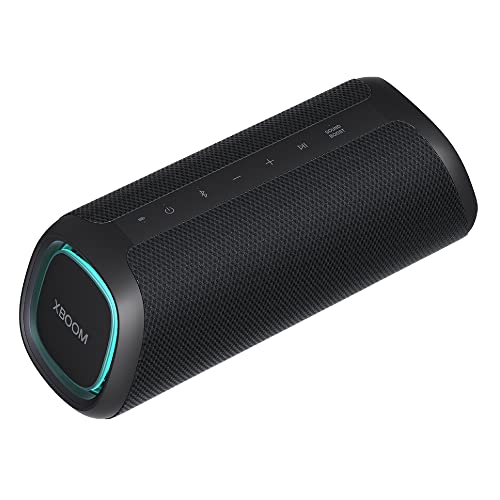
- LG (Punteggio complessivo medio: 7.5)
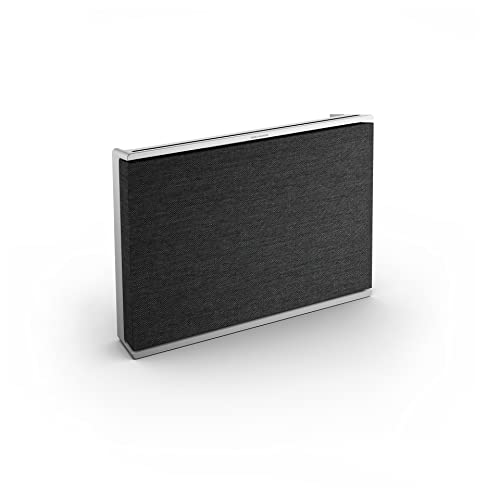
- Bang & Olufsen (Punteggio complessivo medio: 7.4)
Il grafico seguente classifica le marche che producono altoparlanti portatili con radio FM in base al punteggio complessivo medio.
[horizontal-chart-11343554086908987423031296702477449723653452132208]
Come funziona la radio FM su un altoparlante portatile?
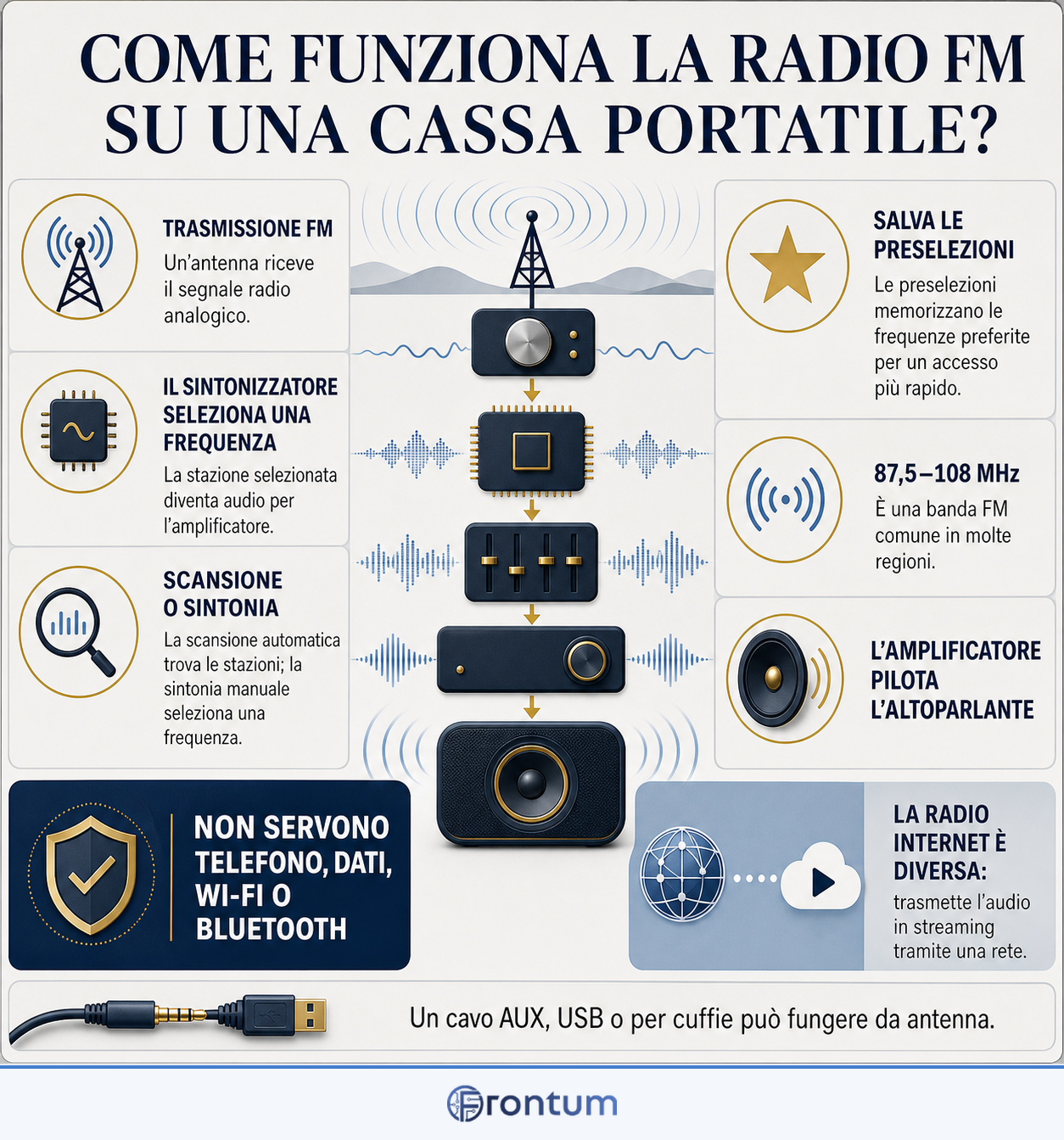
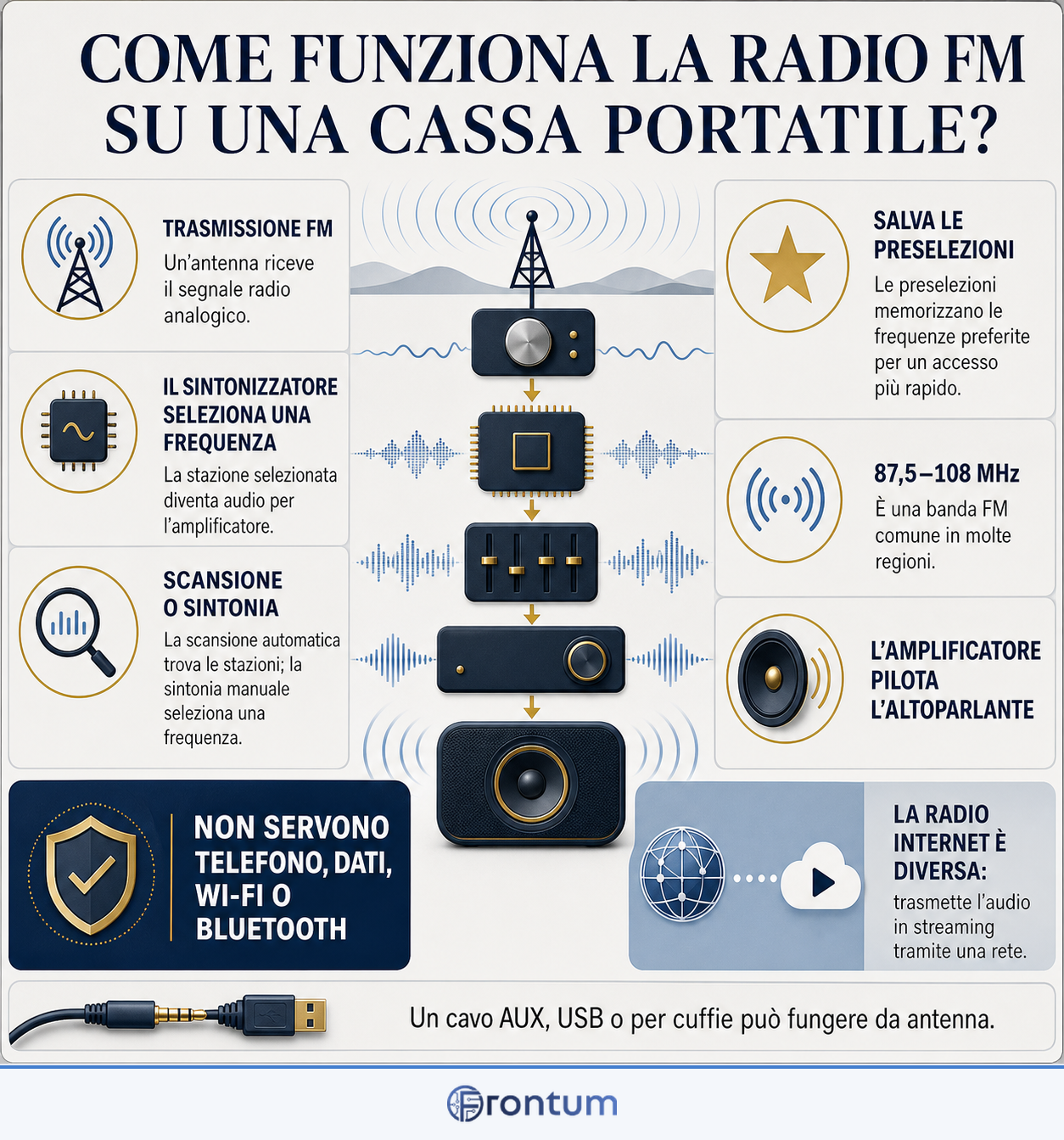
La radio FM su un altoparlante portatile funziona tramite un sintonizzatore integrato che riceve trasmissioni analogiche attraverso un'antenna e converte la frequenza selezionata in audio. Non richiede Bluetooth, telefono, dati mobili o Wi‑Fi; nella maggior parte delle regioni la banda FM è intorno a 87,5–108 MHz, anche se limiti esatti e passi di sintonia variano.
Dopo essere passato alla modalità FM, l'altoparlante può cercare automaticamente le stazioni o sintonizzarle manualmente, mentre le preselezioni memorizzano le frequenze preferite. L'antenna può essere telescopica, interna oppure costituita da un cavo AUX, USB o per cuffie collegato; alcuni sintonizzatori mostrano anche informazioni sulla stazione tramite RDS. La radio internet fornita da un'app è diversa, perché trasmette l'audio tramite una rete invece di ricevere una trasmissione FM.
Quanto è buona la ricezione FM sugli altoparlanti portatili?
La ricezione FM su un altoparlante portatile può essere chiara e stabile quando il sintonizzatore ha un'antenna utile e il segnale locale è forte, ma i modelli compatti sono più sensibili al posizionamento rispetto a una buona radio dedicata. Pareti, cemento armato, disturbi elettrici e antenna retratta possono causare fruscio o stereo intermittente.
Un'antenna telescopica è di solito il design più prevedibile perché può essere estesa e orientata; alcuni altoparlanti usano il cavo di ricarica o AUX come antenna, e ciò funziona solo quando è collegato il cavo specificato. La scansione automatica è comoda, ma sintonia manuale e preselezioni sono importanti quando due stazioni vicine competono.
Prova la ricezione nella stanza o nell'area all'aperto in cui userai normalmente l'altoparlante. Posizionalo vicino a una finestra e lontano da caricabatterie, router e grandi oggetti metallici, poi ruota o estendi l'antenna prima di giudicare il sintonizzatore; in luoghi con segnale debole, una presa per antenna esterna o una radio da tavolo più grande è una scelta migliore.
Quali connessioni sono utili sugli altoparlanti portatili con radio FM?
Le seguenti connessioni sono utili sugli altoparlanti portatili con radio FM:
- Bluetooth: il Bluetooth permette lo streaming da un telefono quando non è disponibile una stazione adatta. Bluetooth 5.x e multipoint migliorano la comodità, ma nessuna delle due caratteristiche cambia la qualità del sintonizzatore FM integrato.
- Ingresso AUX da 3,5 mm: l'AUX accetta vecchi lettori, radio e laptop con una latenza prevedibile e bassa. Su alcuni modelli il cavo collegato funge anche da antenna FM, quindi la ricezione può peggiorare quando viene rimosso.
- Riproduzione da USB e scheda di memoria: la riproduzione da USB, SD o microSD mantiene disponibile la musica senza dati mobili o Bluetooth. Conferma i formati di file supportati, la capacità massima della scheda e il metodo di navigazione tra le cartelle, perché variano molto.
- Uscita cuffie: una presa per cuffie consente di ascoltare la radio in privato e può essere utile di notte. Non dare per scontato che il jack AUX funzioni in entrambe le direzioni: ingresso e uscita sono funzioni separate.
- Connessione dell'antenna: un'antenna telescopica è la soluzione più semplice per l'uso portatile, mentre una presa per antenna esterna può migliorare la ricezione in una stanza fissa o in un'area con segnale debole. Verifica il tipo di connettore e se l'antenna interna viene disattivata quando ne colleghi una esterna.
- USB-C o alimentazione di rete: USB-C è comodo per la ricarica, ma i grandi altoparlanti da tavolo e da festa possono richiedere un connettore cilindrico o un ingresso diretto alla rete. Controlla se l'altoparlante può riprodurre FM durante la ricarica e se il rumore elettrico del caricatore influisce sulla ricezione.
Quanto costano gli altoparlanti portatili con radio FM?
Gli altoparlanti portatili con radio FM costano generalmente circa 30–400 €, mentre i sistemi premium da tavolo e da festa grandi possono costare di più. I modelli base intorno a 30–70 € combinano FM, Bluetooth e controlli semplici; la fascia 70–150 € aggiunge più spesso un display migliore, preselezioni delle stazioni, suono più potente, riproduzione USB o da scheda di memoria e maggiore autonomia.
Oltre circa 150 €, aspettati un miglioramento più evidente nel design del sintonizzatore, nella qualità del cabinet, nella potenza, nel suono stereo, nel Wi‑Fi o nei materiali premium. Spendere di più vale la pena quando contano ricezione, controllo facile delle stazioni o audio capace di riempire la stanza; è invece un valore scarso se l'aumento di prezzo deriva soprattutto da luci o watt di picco mentre antenna e sintonizzatore restano di base.
Che cosa controllare prima di acquistare un altoparlante portatile con radio FM?
Prima di acquistare un altoparlante portatile con radio FM, controlla i seguenti fattori:
- Sintonizzatore e bande supportate: conferma che FM sia un vero sintonizzatore integrato e verifica se servono anche AM, DAB o radio internet. Bande disponibili, passi di frequenza e intervallo regionale devono corrispondere alle stazioni del luogo in cui userai l'altoparlante.
- Antenna e ricezione: un'antenna telescopica è pratica per l'uso portatile, mentre una presa esterna è utile in stanze con segnale debole. Se l'altoparlante usa un cavo AUX o di ricarica come antenna, verifica quale cavo è richiesto e se la ricezione cambia durante la ricarica.
- Comandi di sintonia e display: preselezioni, sintonia manuale, scansione automatica e un display della frequenza leggibile rendono molto più facile l'uso quotidiano. Un modello che passa soltanto tra le stazioni trovate è frustrante quando i segnali si sovrappongono o la scansione salta una stazione preferita debole.
- Suono e potenza: circa 3–15 W sono adatti all'ascolto radio personale, mentre 20–100 W offrono più margine in officine, giardini o stanze grandi. Dai priorità a voci chiare e poco fruscio invece di bassi esagerati, perché la maggior parte dell'ascolto radio si concentra sul parlato e sui dettagli dei medi.
- Batteria e alimentazione: punta ad almeno 10 ore di autonomia dichiarata, preferendo 15–20 ore per un'intera giornata lontano dalla rete. Controlla il tempo di ricarica, il supporto USB-C, le batterie sostituibili e se display o volume alto riducono l'autonomia FM.
- Altre sorgenti e uscite: Bluetooth, AUX, USB, riproduzione da scheda di memoria e presa cuffie mantengono utile l'altoparlante quando la ricezione è scarsa. Verifica ogni funzione separatamente e conferma se la porta AUX è un ingresso, un'uscita, un collegamento per antenna o una combinazione di questi ruoli.