Quali marchi producono i migliori altoparlanti portatili impermeabili?
I marchi che producono i migliori altoparlanti portatili impermeabili sono:
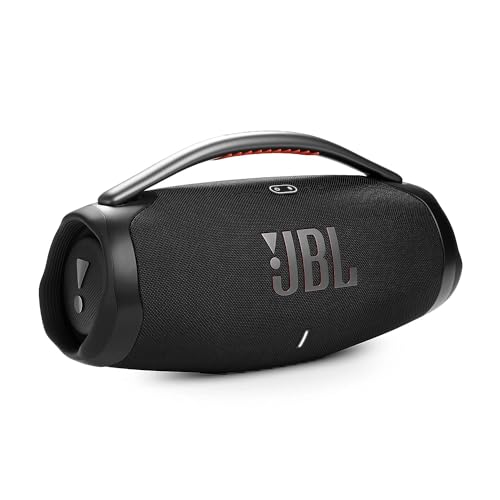
- JBL (Punteggio medio complessivo: 8.1)
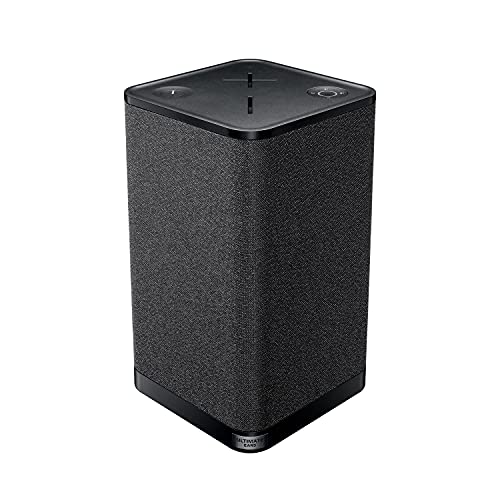
- Ultimate Ears (Punteggio medio complessivo: 7.9)
- Anker (Punteggio medio complessivo: 7.9)
Il grafico seguente classifica i marchi che producono altoparlanti portatili impermeabili in base al punteggio complessivo medio.
[horizontal-chart-11788183690257070185029824076093969634103636223072]
Quale classificazione IP dovrebbe avere un altoparlante portatile impermeabile?
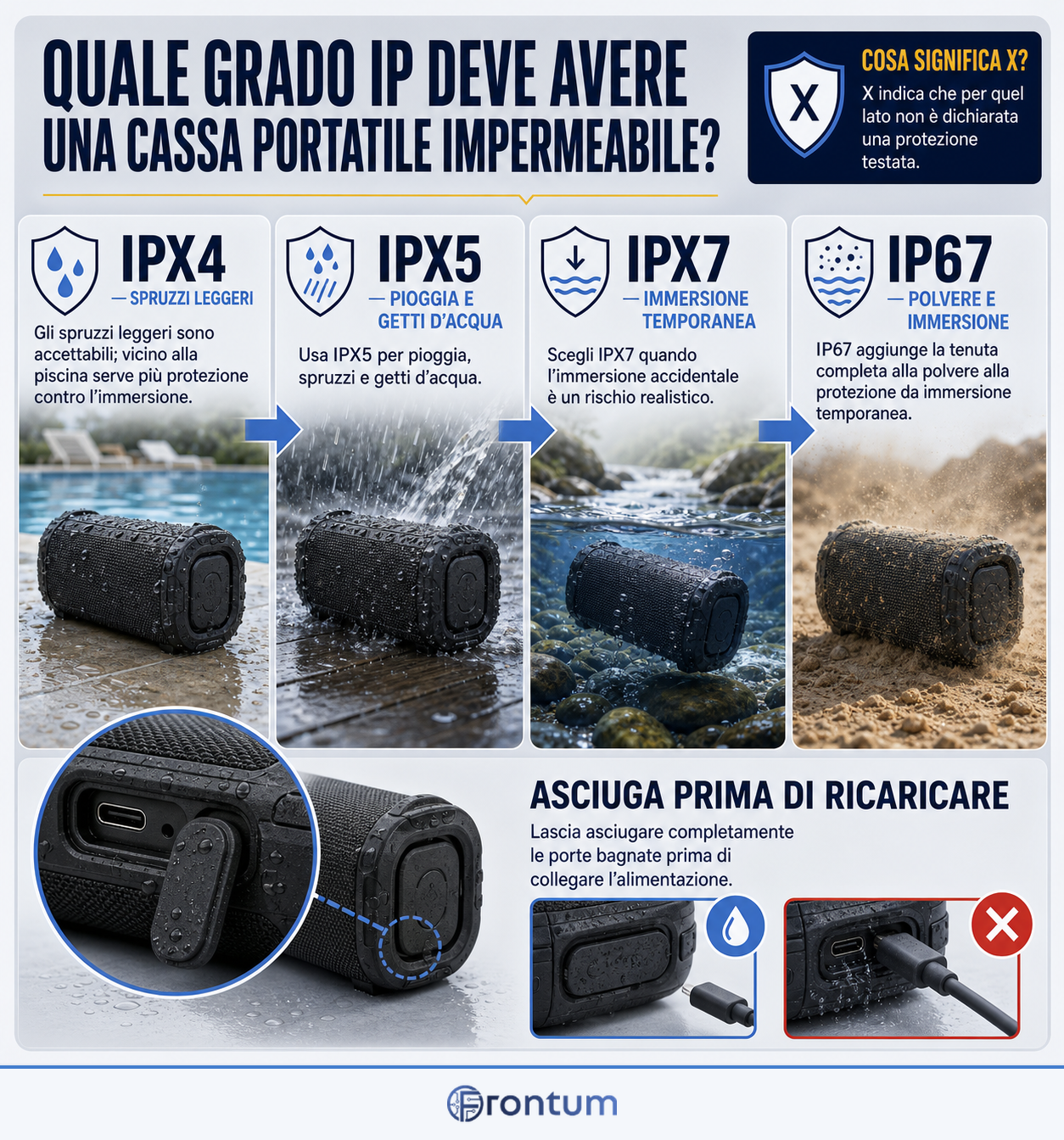
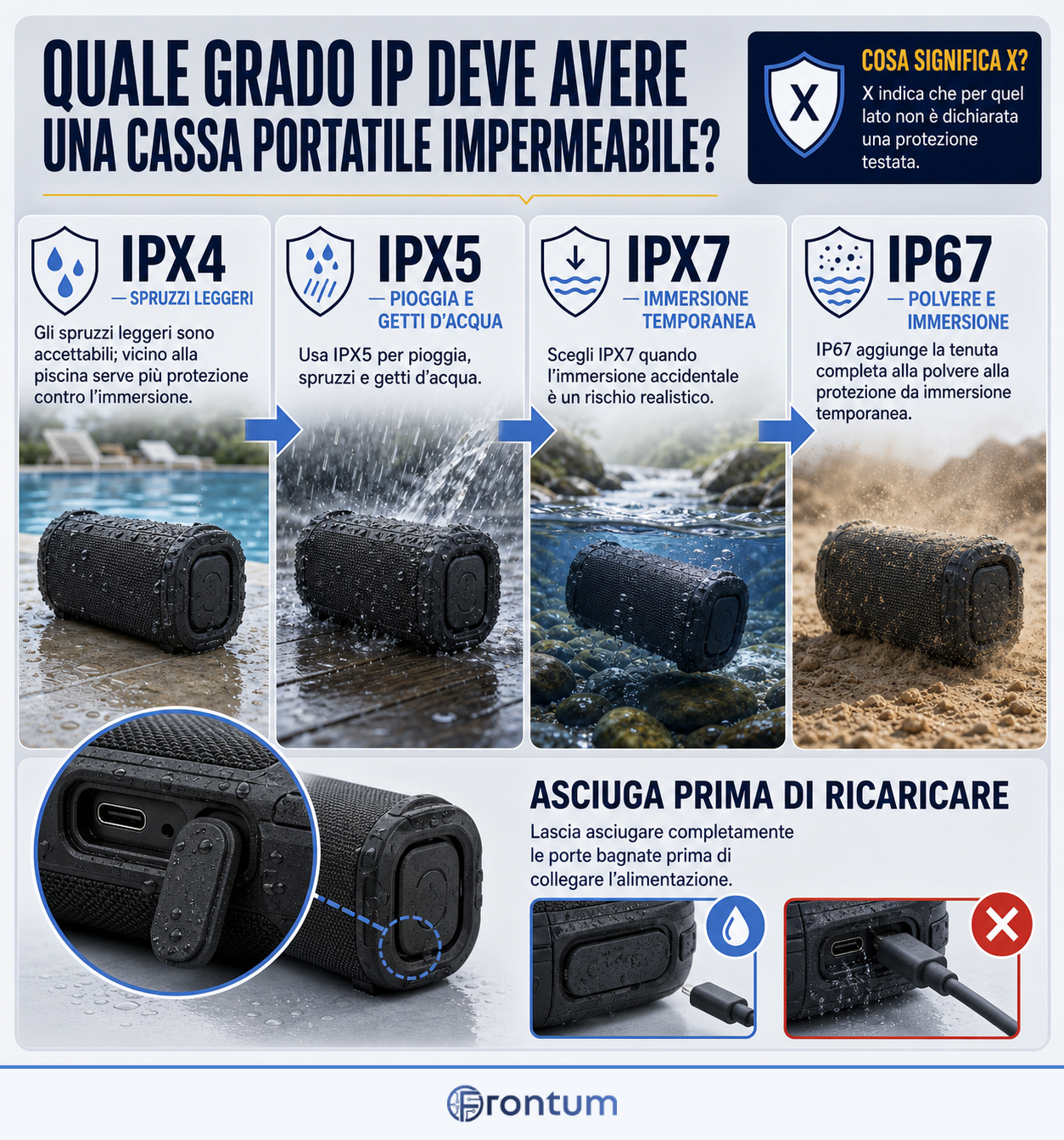
Un altoparlante portatile impermeabile dovrebbe avere almeno IPX5 per pioggia, schizzi e getti d’acqua; scegli IPX7 o IP67 quando il rischio di immersione accidentale è realistico. IPX4 è adatto a schizzi leggeri, ma offre una protezione inferiore vicino a una piscina o su una barca esposta.
La prima cifra IP descrive la protezione dalla polvere e la seconda quella dall’acqua. Una X indica che il produttore non dichiara una classificazione testata per quel lato, quindi IPX7 conferma la resistenza all’immersione ma non dice nulla sulla polvere.
IPX5 e IPX6 coprono getti d’acqua di forza crescente, mentre IPX7 copre normalmente l’immersione temporanea fino alla profondità e al tempo dichiarati dal produttore. IP67 combina la tenuta completa alla polvere con la protezione dall’immersione temporanea; IP68 usa condizioni definite dal produttore, che possono essere più severe ma devono essere verificate modello per modello.
Nessuna classificazione IP significa che l’altoparlante possa essere usato senza precauzioni. Acqua salata, cloro, sapone, acqua calda, coperture delle porte aperte e ricarica quando è bagnato possono non rientrare nelle condizioni del test; risciacqua con acqua dolce quando consentito e lascia asciugare completamente le porte prima di collegare l’alimentazione.
Quanto sono resistenti gli altoparlanti portatili impermeabili?
Gli altoparlanti portatili impermeabili possono essere abbastanza resistenti per spiagge, campeggi e bordo piscina, ma la resistenza all’acqua e quella agli urti sono proprietà separate. Una scocca sigillata può sopravvivere a un’immersione e tuttavia creparsi dopo una caduta, mentre radiatori esposti, tessuto decorativo e coperture delle porte allentate possono rimanere vulnerabili.
Per l’uso frequente all’aperto, cerca tenuta alla polvere, una scocca gommata, comandi incassati, una base stabile e una cinghia o maniglia sicura. Le dichiarazioni sui test di caduta e i limiti di temperatura operativa sono più informative dell’aspetto robusto, e ogni guarnizione o copertura danneggiata va considerata una riduzione della protezione.
Il grafico sotto mostra la percentuale di altoparlanti portatili impermeabili resistenti alla polvere.
[pie-chart-13684483980401829090142617666662223755801230221951]
Quanto suonano bene gli altoparlanti portatili impermeabili?
Gli altoparlanti portatili impermeabili possono suonare molto bene, anche se la sigillatura e la costruzione robusta influenzano la progettazione acustica. Membrane protettive e cabinet compatti possono ridurre l’apertura degli acuti o l’estensione dei bassi profondi, quindi la messa a punto, l’area dei driver e i radiatori passivi contano più della sola dicitura impermeabile.
Per l’ascolto ravvicinato, circa 5–20 W sono sufficienti; 20–80 W offrono più margine all’aperto, dove lo spazio aperto assorbe i bassi e il rumore di fondo maschera i dettagli. Ascolta bassi controllati e voci nitide al volume che ti serve, perché le modalità aggressive per esterni o per i bassi possono aumentare la distorsione e consumare più rapidamente la batteria.
Il posizionamento fa una grande differenza all’aperto. Tieni l’altoparlante lontano dalla sabbia morbida, evita di bloccare un radiatore posteriore e orienta verso gli ascoltatori un modello direzionale; un design a 360° distribuisce il suono più uniformemente per un gruppo, ma può offrire un’immagine stereo meno focalizzata.
Quanto costano gli altoparlanti portatili impermeabili?
Gli altoparlanti portatili impermeabili costano generalmente circa 30–300 €, mentre i grandi sistemi da festa e i design premium possono arrivare a 500 € o più. I modelli base intorno a 30–70 € offrono spesso Bluetooth essenziale e protezione dagli schizzi; spendere 70–150 € porta più comunemente a una tenuta di livello IP67, una messa a punto migliore, maggiore autonomia e costruzione più robusta.
Oltre circa 150 €, cerca un guadagno chiaro in potenza, estensione dei bassi, capacità della batteria, collegamento di più altoparlanti, Wi-Fi o componenti riparabili, invece di pagare solo l’etichetta IP. Un altoparlante IP67 ben costruito nella fascia media offre di solito un valore migliore di un modello più costoso il cui prezzo aggiuntivo deriva soprattutto da dimensioni o stile.
Cosa dovresti controllare prima di acquistare un altoparlante portatile impermeabile?
Prima di acquistare un altoparlante portatile impermeabile, controlla i seguenti fattori:
- Classificazione IP per l’ambiente: Scegli almeno IPX5 per pioggia e schizzi, e preferisci IPX7 o IP67 vicino a piscine, barche e spiagge. Una X indica che la protezione dalla polvere non è stata dichiarata, mentre IP67 conferma sia la tenuta alla polvere sia l’immersione temporanea nelle condizioni indicate.
- Porte, guarnizioni e limiti di manutenzione: Una copertura allentata o una porta di ricarica bagnata può vanificare una classificazione altrimenti elevata. Verifica se sono consentiti acqua salata, cloro, sapone, risciacquo, galleggiamento e ricarica quando è bagnato, poi segui le istruzioni per l’asciugatura.
- Resistenza a cadute e polvere: L’impermeabilità non garantisce la sopravvivenza a una caduta. Per campeggio o cantiere, cerca una scocca gommata, comandi incassati, una base stabile, test di caduta espliciti e protezione dalla polvere invece di affidarti allo stile robusto.
- Potenza e suono all’aperto: Circa 5–20 W sono adatti all’ascolto personale, mentre 20–80 W offrono più margine utile per un gruppo. Confronta la potenza continua e la distorsione al volume alto, e considera la dispersione a 360° quando gli ascoltatori saranno seduti intorno all’altoparlante.
- Batteria e ricarica: Punta ad almeno 10–12 ore di riproduzione dichiarata, con 20–24 ore utili per le lunghe giornate all’aperto. USB-C, un indicatore di carica chiaro e la riproduzione durante la ricarica sono importanti, ma non collegare mai l’alimentazione finché la porta non è asciutta.
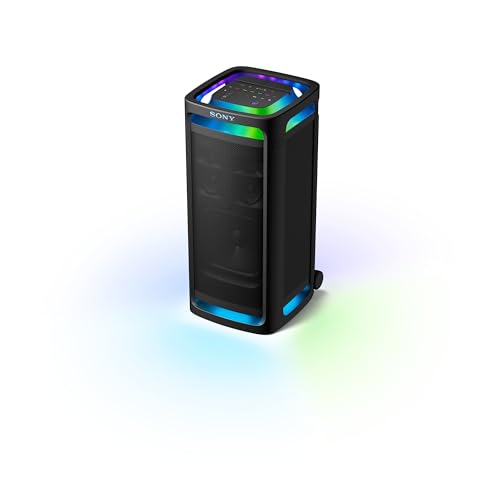
- Dimensioni e trasporto: I modelli intorno a 200–600 g sono adatti a borse ed escursioni giornaliere, mentre i grandi altoparlanti da festa impermeabili possono superare 4 kg. Abbina maniglia, cinghia o ruote al modo effettivo di trasporto e verifica che l’altoparlante rimanga stabile su terreno irregolare.